
|
Getting your Trinity Audio player ready...
|
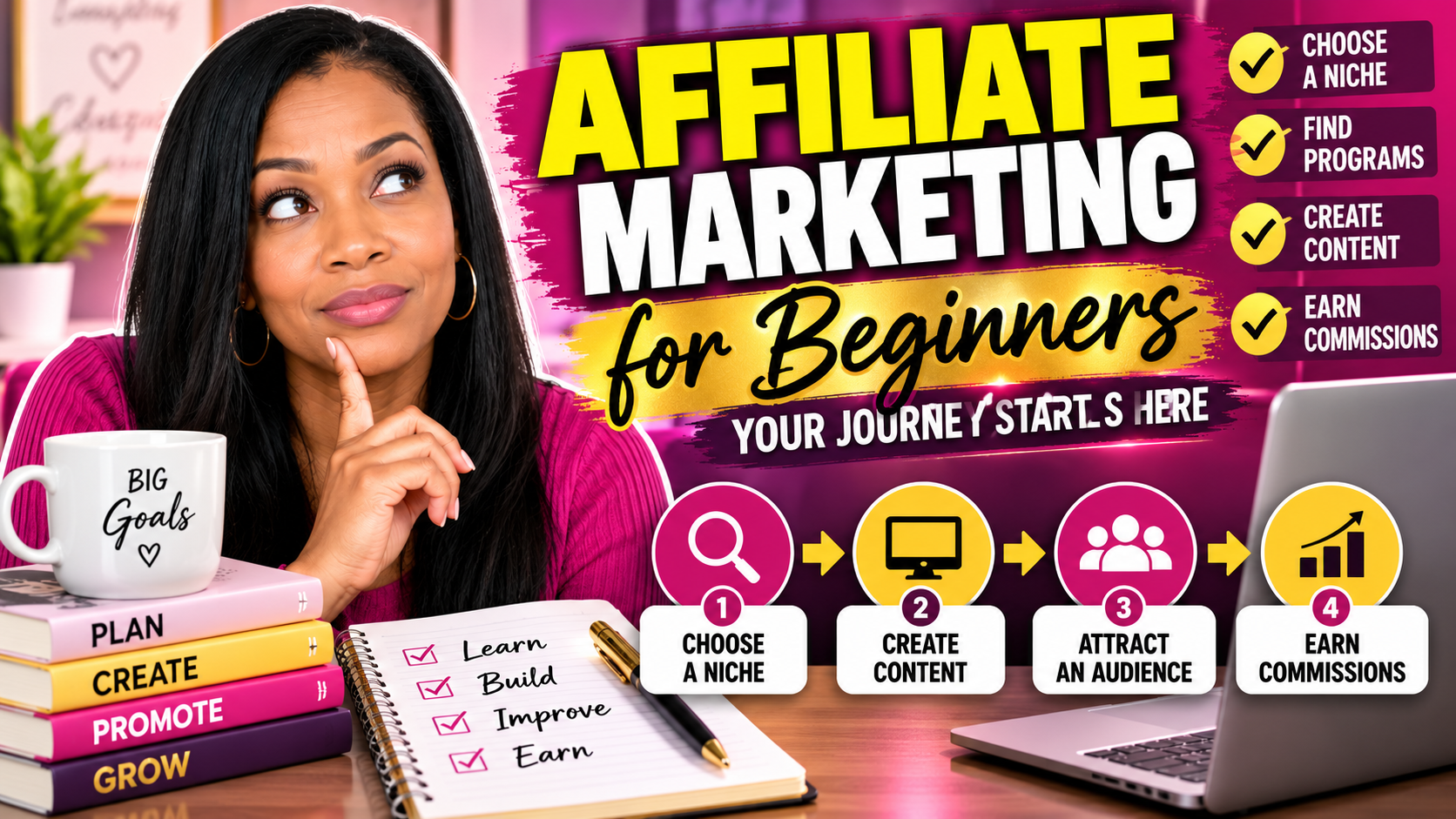
Affiliate Marketing for Beginners: Your Journey Starts Here
Want to start an online business but don’t know where to begin? Let’s break down affiliate marketing, how it works, and what your first steps should actually look like.
No expensive shortcuts. No overnight millionaire promises. Just a practical starting point.
Affiliate disclosure: This article may contain affiliate links. If you purchase through one, I may earn a commission at no additional cost to you. Earnings are never guaranteed.
Let me ask you something.
Have you ever watched somebody on YouTube talk about making money through affiliate marketing and thought, “Okay, but how does this actually work?”
One person tells you to start a blog. Another says you need thousands of social media followers. Somebody else is trying to sell you a $997 course before you’ve even learned what an affiliate link is.
And now you’re confused before you’ve even started!
Well, welcome to Success with Trecia.
Today, we’re going to make this simple. I’ll explain what affiliate marketing is, how beginners can get started, and what you should focus on before spending money on tools or training.
Watch My Affiliate Marketing Introduction
Prefer watching instead of reading? This is the video featured in my original beginner guide. You can also watch it directly on YouTube.
1. What Is Affiliate Marketing?
Affiliate marketing is a business model where you recommend products or services offered by another company.
When someone uses your special tracking link and completes a qualifying purchase or action, the company may pay you a commission.
For example, imagine you have a website about taking care of dogs.
You write an article explaining how to choose a comfortable dog harness.
You recommend a harness and include your affiliate link.
Someone reads your article, clicks your link, and buys the harness.
If the purchase qualifies under the program’s rules, you earn a commission.
That’s the basic concept.
How Affiliate Marketing Works
Not every click or purchase qualifies for a commission.
You don’t necessarily need to manufacture products, keep inventory, or handle shipping.
But you do need to build trust, attract an audience, and provide information people find useful.
2. Choose a Niche Before Choosing Products
One of the biggest beginner mistakes is trying to promote everything.
Today you’re recommending skincare. Tomorrow it’s dog collars. Next week it’s lawn equipment.
And your audience has absolutely no idea what your business is about!
That’s why I recommend starting with a niche.
A niche is simply a specific subject or audience your content focuses on.
Pet Care
Training tips, pet accessories, grooming, and product comparisons.
Beauty
Skincare routines, affordable products, and beauty education.
Home & Living
Organization, household products, and practical home solutions.
Technology
Beginner tutorials, software guides, and product comparisons.
Choose a topic you’re willing to research, talk about, and create content around consistently.
But don’t choose a niche based only on how much commission somebody claims you can make.
Ask yourself whether people genuinely need help in that area and whether you can provide useful answers.

3. Find Affiliate Programs That Match Your Niche
Once you’ve chosen your topic, you can start researching affiliate programs.
Some companies operate their own programs. Others use affiliate networks that connect publishers with multiple advertisers.
Before joining, look at:
- Commission structure: How much do you earn for a qualifying sale or action?
- Tracking window: How long can a referral remain eligible?
- Payment requirements: Is there a minimum balance before payment?
- Promotion rules: Are websites, YouTube videos, email, or social media allowed?
- Product quality: Would you feel comfortable recommending the product?
Some programs require an established website or existing content before approving you.
So don’t panic if you’re not accepted immediately.
Don’t join twenty affiliate programs before you’ve created your first piece of content. Start by learning what your audience needs.
4. Decide Where You’ll Build Your Audience
Now you need a place where people can discover your recommendations.
That could be a blog, YouTube channel, social media account, or a combination of platforms.
Each approach has advantages.
| Platform | Why Use It? | Considerations |
|---|---|---|
| Website or Blog | Organize helpful articles and build a long-term content library | Hosting may cost money; search traffic takes time |
| YouTube | Demonstrate products and explain topics visually | Video production takes practice and time |
| Social Media | Connect with people through short posts and videos | Reach and linking rules depend on the platform |
Personally, I like having a website as a central home for business content.
But that doesn’t mean everyone has to start there.
If you prefer speaking on camera, YouTube may be a natural starting point.
If you enjoy writing, a blog could be a good fit.
The important thing is to choose a platform you’ll actually use consistently.
For a detailed website setup tutorial, read How to Start Affiliate Marketing With a Website in 2026.
5. Create Content That Helps Before It Sells
Here’s something I want every beginner to understand.
Affiliate marketing isn’t just about putting links everywhere.
Nobody wants to visit your website and feel like somebody is chasing them through the internet yelling, “BUY THIS! BUY THIS!”
People are looking for answers.
So give them answers.
You could create:
- Beginner tutorials that explain how something works.
- Product comparisons that help people choose.
- Honest reviews discussing advantages and disadvantages.
- How-to articles that solve common problems.
- Videos demonstrating how a product works.
For example, instead of writing an article called “Buy This Dog Harness,” write “How to Choose a Comfortable Harness for a Dog That Pulls.”
See the difference?
One is focused on selling. The other is focused on helping.
And helpful content gives people a reason to trust your recommendations.

6. Be Honest About Affiliate Links
If you’re earning commissions from your recommendations, tell your audience.
The Federal Trade Commission requires clear disclosure of material relationships that could affect how people evaluate an endorsement.
For example, you might write:
Place disclosures where readers can easily notice them, close to the relevant recommendations.
Don’t assume that a disclosure buried in your footer is enough.
Learn more from the FTC’s official disclosure guidance.
7. How Much Does It Cost to Start?
Here’s where I want you to be careful.
You can learn the basics of affiliate marketing for free.
But operating a business may involve expenses.
Depending on your approach, you might pay for a domain, website hosting, software, equipment, or advertising.
You don’t necessarily need all of those things immediately.
And you definitely don’t need to buy every expensive course somebody recommends.
Before purchasing training, read my article Paid Course vs. Free YouTube Videos: What Actually Teaches You Affiliate Marketing?.
It explains how low-priced courses can lead to additional upsells and how to evaluate the total cost.
8. Your First 30 Days in Affiliate Marketing
You don’t need to become an expert in a month.
Your goal is to create a foundation you can continue building.
Your Beginner Action Plan
By the end of those 30 days, you may have your first pieces of content published and a clearer understanding of what you need to learn next.
That’s progress.
It doesn’t mean you’re guaranteed to make money within 30 days, and that’s okay.
9. Don’t Confuse Affiliate Marketing With a Pyramid Scheme
Another question beginners often ask is whether affiliate marketing is just another pyramid scheme.
They’re different business models.
Traditional affiliate marketing generally pays commissions for qualifying customer purchases or actions.
Illegal pyramid schemes rely on compensation structures that emphasize recruitment rather than genuine customer demand.
But be careful: simply calling something an affiliate program doesn’t automatically make it legitimate.
Read Affiliate Marketing vs. Pyramid Schemes: What’s the Real Difference? before joining an unfamiliar opportunity.
10. What Beginners Should Remember
Affiliate marketing is not a magic button.
You’re learning how to create content, understand an audience, evaluate products, and build trust.
Those are real business skills.
And those skills take time to develop.
You may make mistakes. You may create content that nobody watches. You may discover that a niche isn’t right for you.
That doesn’t mean you should immediately buy another course or start over with a completely different business model.
Sometimes the next step is simply to improve what you’ve already started.
Your first goal shouldn’t be to make $10,000. It should be to understand your audience, publish something genuinely helpful, and learn how your chosen business model works.
Frequently Asked Questions
Can I start affiliate marketing without experience?
Yes. Beginners can learn the fundamentals through free resources, tutorials, and practice. You will still need to develop content, marketing, and research skills.
Do I need a website?
Not always. Some affiliate programs permit promotion through approved social media accounts or video channels. Always check the program’s requirements.
Can I start without buying a course?
Yes. Paid training is optional. Free resources can teach the fundamentals, although structured instruction or feedback may be helpful for some learners.
How long does it take to earn money?
There is no reliable universal timeline. Some people earn commissions relatively early, while others may spend months creating content without generating meaningful revenue.
Is affiliate marketing passive income?
Some content can continue generating commissions after publication, but research, maintenance, updates, and audience development still require work.
Final Thoughts: Start Small, Learn, and Keep Building
Here’s what I want you to take away from this guide.
You do not need to know everything before you start.
You do not need fifteen software subscriptions.
And you certainly don’t need to spend your last dollar on somebody’s promise of overnight success.
Choose a niche. Learn about your audience. Create something helpful.
Then build from there.
Because the goal isn’t just to make a quick commission.
The goal is to develop the knowledge and skills to build something worthwhile.
And that’s what Success with Trecia is all about.
Ready for Your Next Step?
Now that you understand the basics, learn how to build your own affiliate marketing website from the ground up.
Read the Website Setup GuideLet’s talk: What’s the biggest thing stopping you from getting started with affiliate marketing? Tell me in the comments. Your question might become my next article or YouTube video.
Disclaimer: This content is for educational purposes. Affiliate marketing involves risk, and no income or business outcome is guaranteed.