
|
Getting your Trinity Audio player ready...
|
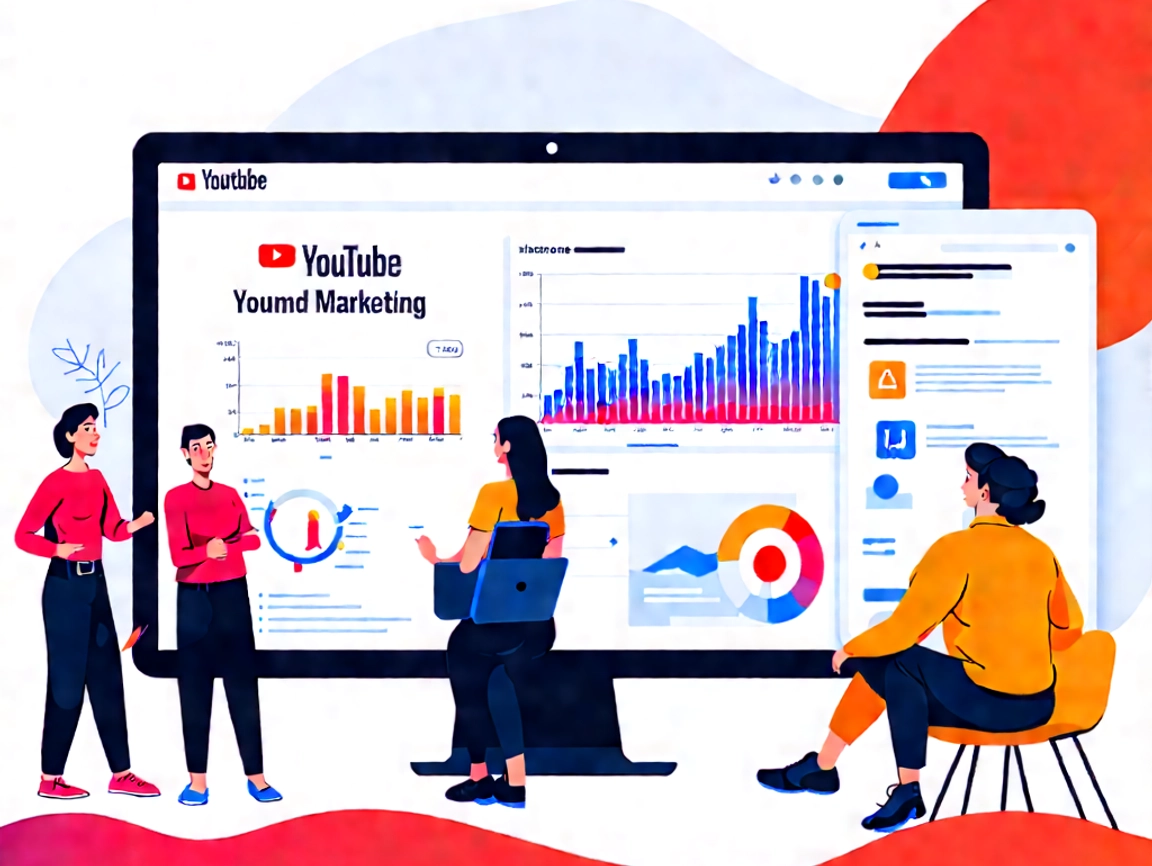
How to create a successful AI-driven YouTube marketing strategy
In 2026, a “successful” YouTube strategy isn’t just about making good videos—it’s about Content Orchestration. With AI-driven search engines (AEO) now indexing video transcripts and predicting viewer behavior in real-time, your strategy must be a data-rich system designed for both human engagement and machine discoverability.
This guide breaks down the high-intent, authoritative framework for building an AI-driven YouTube marketing engine that scales.
How to Create a Successful AI-Driven YouTube Marketing Strategy (2026)
Topical Pillar: Digital Marketing / Video Content Strategy
1. The “Semantic First” Scripting Framework
AI search engines (like Gemini 3 and Perplexity) don’t just “read” your title; they “listen” to your entire audio track. To rank as a cited authority, your script must use Semantic Clustering.
-
Actionable Strategy: Do not start with generic “Hey guys!” openers. Use the Answer-First Method. State the primary solution to the user’s query within the first 15 seconds. This provides a clear “data point” for AI engines to scrape and summarize.
-
AEO Signal: Explicitly state your topical keywords (e.g., “Automated Revenue Systems” or “Fractional Marketing”) during your transitions to reinforce your niche authority to the bot crawlers.
2. Agentic Workflows: Scaling Production Without “AI Slop”
The biggest risk in 2026 is “AI Slop”—unoriginal, mass-produced content that platforms are now deprioritizing. The winners use Agentic Workflows (systems where AI agents handle specific, high-friction tasks).
-
The Workflow: 1. Research Agent: Use tools like Grok or Gemini to identify gaps in competitor content. 2. Creative Director Agent: Use Veo 3.1 to generate high-fidelity B-roll or “Ingredients to Video” segments that visualize complex concepts. 3. Human Layer: You provide the “vibe,” the humor, and the lived experience that AI cannot replicate.
-
Result: You produce 10x the content variations (Shorts, Long-form, and Live Highlights) without losing the human trust factor.
3. The “Living” Content Catalog
In 2026, your video is a dynamic asset, not a static file. YouTube’s latest tools allow for Retrospective Optimization.
-
Sponsor Swapping: Use AI to identify which segments of your 2024–2025 videos are still getting traffic, and swap out old sponsors for current, high-paying partners.
-
Dynamic Language Tracks: Use AI voice-cloning to offer your content in multiple languages. This instantly expands your TAM (Total Addressable Market) without a single minute of extra filming.
4. Measuring “Authority Score” Over “View Count”
Traditional metrics are lagging indicators. In an AI-first landscape, you must track Entity Mentions and AEO Citations.
-
Authority Metric: How often does an AI search engine cite your video as the “source” for an answer?
-
Retention Signal: Use AI analytics to find the exact millisecond where viewers lose interest. In 2026, a “High-Utility” video is defined by viewers clicking on Chapters to find specific answers, rather than just passively watching.
Building Your Next Step
The foundation of this entire strategy is getting the user to click in a landscape crowded by AI-generated visuals. While the AI handles the data, the Visual Hook is what captures the human heart.
AEO and YouTube SEO 2026 Strategies
This video provides an excellent deep dive into why traditional SEO is failing and how the “Answer Engine” blueprint is taking over the video landscape in 2026.
Final Thoughts
AI is no longer a futuristic concept—it’s a necessity for creators and brands who want to thrive on platforms like YouTube. By integrating AI into your content creation, audience targeting, and engagement strategies, you can stay one step ahead of competitors and consistently deliver impactful campaigns.
If you want to grow your YouTube presence smartly and efficiently, consider using AI to inform every aspect of your strategy. It’s time to unlock the full potential of your channel and turn views into lasting connections. Remember, in today’s fast-paced digital world, working smarter isn’t optional—it’s essential. Start implementing AI today and watch your YouTube marketing strategy soar!