

|
Getting your Trinity Audio player ready...
|
Have you ever read a product review and finished it knowing absolutely nothing more than when you started?
You know the kind I’m talking about.
“This product is amazing!”
“It has incredible features!”
“I highly recommend it!”
And then, of course, there’s a big button telling you to buy it.
But here’s my question.
What exactly did that review help you decide?
That’s the problem with a lot of affiliate product reviews. They’re written to promote a product instead of helping someone figure out whether that product is actually right for them.
And readers can usually tell the difference.
If you’re building an affiliate marketing website, learning how to write helpful product reviews is one of the most valuable skills you can develop.
Not because every review will generate a commission. It won’t.
But because useful reviews can help you earn something more important first: trust.
Help the reader understand what the product does, who it’s best for, where it falls short, and whether it’s worth considering compared with other options.
1. Start With the Reader’s Problem, Not the Product’s Features
Here’s where I think many beginners get it backward.
They find an affiliate product with a decent commission, look at its sales page, and start rewriting the list of features.
But the person reading your review probably isn’t searching for a list of features.
They’re trying to solve a problem.
Maybe they need a laptop that can handle working from home.
Maybe they’re looking for affordable website hosting.
Maybe they want a beginner-friendly microphone for recording YouTube videos.
Whatever the product, your review should begin with the reason someone might need it.
Ask These Questions Before You Write
- Who is considering this product?
- What problem are they trying to solve?
- What are they worried about before buying?
- What alternatives are they considering?
- What information would help them make a better decision?
For example, instead of starting a website hosting review with a paragraph about the company’s history, you could begin with something more useful.
Now you’re talking to the reader instead of just talking about a product.
2. Be Clear About Whether You’ve Actually Used the Product
This is a big one, especially now that AI can generate product reviews in seconds.
There’s a difference between reviewing something you’ve personally tested and researching a product based on public information.
Both approaches can provide useful information, but they should never be presented as the same thing.
If you’ve used the product, explain what you did with it.
What worked? What didn’t? What surprised you?
If you haven’t used it, be upfront about that.
You can still create a useful research-based comparison using product documentation, specifications, verified pricing, and credible independent testing.
Just don’t pretend you’ve had an experience you haven’t had.
“I haven’t personally tested this product. This comparison is based on published specifications, current product information, and available independent reviews. I’ll explain what I could verify and what remains uncertain.”
That kind of honesty may seem less exciting than claiming every product is wonderful.
But it gives readers a more accurate understanding of what they’re getting.

3. Explain What the Product Actually Does
Don’t assume readers understand technical language.
Sometimes a product’s sales page is filled with terms that sound impressive but don’t explain much.
Instead of repeating those terms, translate them into everyday language.
For example, imagine you’re reviewing a website hosting service.
The sales page might advertise automated backups, SSL certificates, and managed updates.
A beginner may not understand why any of those things matter.
Your job is to explain.
- Automated backups: Copies of your website that may help you recover from certain problems.
- SSL certificate: Helps encrypt information exchanged between visitors and your website.
- Managed updates: Certain software updates are handled by the hosting provider, depending on the plan.
See the difference?
You’re helping someone understand the practical value of a feature instead of simply repeating a marketing claim.
4. Talk About the Drawbacks, Even When You’re an Affiliate
Let me say something that might surprise new affiliate marketers.
Explaining why someone shouldn’t buy a product can make your review more useful.
Every product has limitations.
Maybe it’s too expensive for beginners.
Maybe it requires technical knowledge.
Maybe the cheapest plan doesn’t include an important feature.
Maybe the cancellation policy is restrictive.
Whatever the drawback, readers deserve to know about it.
And if a product doesn’t have a major weakness for your intended audience, don’t invent one just to make your review look balanced.
Focus on limitations that are real and relevant.
- What I like: The product’s most useful strengths.
- What could be better: Relevant limitations or trade-offs.
- Who it’s best for: The audience most likely to benefit.
- Who should skip it: People whose needs would be better served elsewhere.
When you explain both sides, you’re helping the reader make a decision rather than pushing everyone toward the same purchase.
5. Compare the Product With Real Alternatives
Sometimes readers aren’t trying to decide whether a product is good.
They’re trying to decide which of two or three products makes the most sense.
That’s where comparisons become valuable.
Let’s say you’re reviewing an email marketing platform.
A beginner might want to know:
- Which platform is easier to learn?
- Which offers a suitable free or low-cost plan?
- What happens when the subscriber list grows?
- Which features are included at each pricing level?
- How easy is it to move to another platform later?
These questions are often more helpful than simply saying one platform is the best.
And remember, the most expensive option isn’t always the right one.
A beginner with 50 subscribers may have very different needs from a business managing 50,000 subscribers.
6. Explain the Real Cost, Not Just the Advertised Price
Price can be one of the biggest deciding factors in a product review.
But it’s also one of the easiest areas to misunderstand.
A product might advertise a low introductory price that increases when the subscription renews.
Another might require additional purchases to unlock important features.
Some services charge based on usage, subscribers, storage, or other limits.
Before publishing a review, investigate the pricing structure.
- Is the advertised price introductory or ongoing?
- Is the product billed monthly or annually?
- Are there setup fees or required add-ons?
- Does the price increase as usage grows?
- What are the cancellation and refund terms?
Prices and policies change. Include the date you checked them and encourage readers to verify the current terms before purchasing.

7. Make Your Recommendation Specific
Here’s something I would avoid writing:
Why?
Because very few products are the best choice for everyone.
Instead, explain the circumstances where the product makes sense.
For example:
That recommendation is more useful because it gives the reader a reason to agree or disagree.
It also shows that you’ve considered different needs rather than treating every visitor as a potential commission.
8. Add Affiliate Links Where They Actually Help
Affiliate links belong in product reviews when they’re relevant and clearly disclosed.
But you don’t need to place a purchase button after every paragraph.
That can make the article feel more like a sales pitch than an honest review.
Instead, place links where the reader has enough information to take the next step.
For example, you might include a link after explaining the product’s main features and another near your final recommendation.
Use descriptive wording such as:
- Check the current plans and pricing.
- View the product’s specifications.
- Compare the available options.
These calls to action tell readers what to expect when they click.
Don’t Hide Your Affiliate Disclosure
If you may earn a commission from a recommendation, make that relationship clear before or near the affiliate link.
A simple disclosure might say:
“This article contains affiliate links. If you purchase through one of my links, I may earn a commission at no additional cost to you.”
Don’t bury that information in tiny text at the bottom of the website.
Transparency is part of building trust.
9. Don’t Let AI Invent Your Product Review
AI can be useful when you’re organizing a review.
It can help create an outline, simplify technical explanations, or identify questions worth researching.
But it can also confidently generate incorrect product specifications, outdated prices, and fictional experiences.
And that’s a serious problem when readers are using your article to decide whether to spend money.
If you use AI while preparing a review, verify every important claim against reliable sources.
Never publish an AI-generated statement claiming you tested a product when you didn’t.
And don’t let AI invent customer testimonials or product performance results.
Use AI to help organize your thinking. Don’t use it to manufacture experience, evidence, or recommendations.
10. A Simple Product Review Template You Can Follow
If you’re staring at a blank screen wondering how to structure your next review, use this outline.
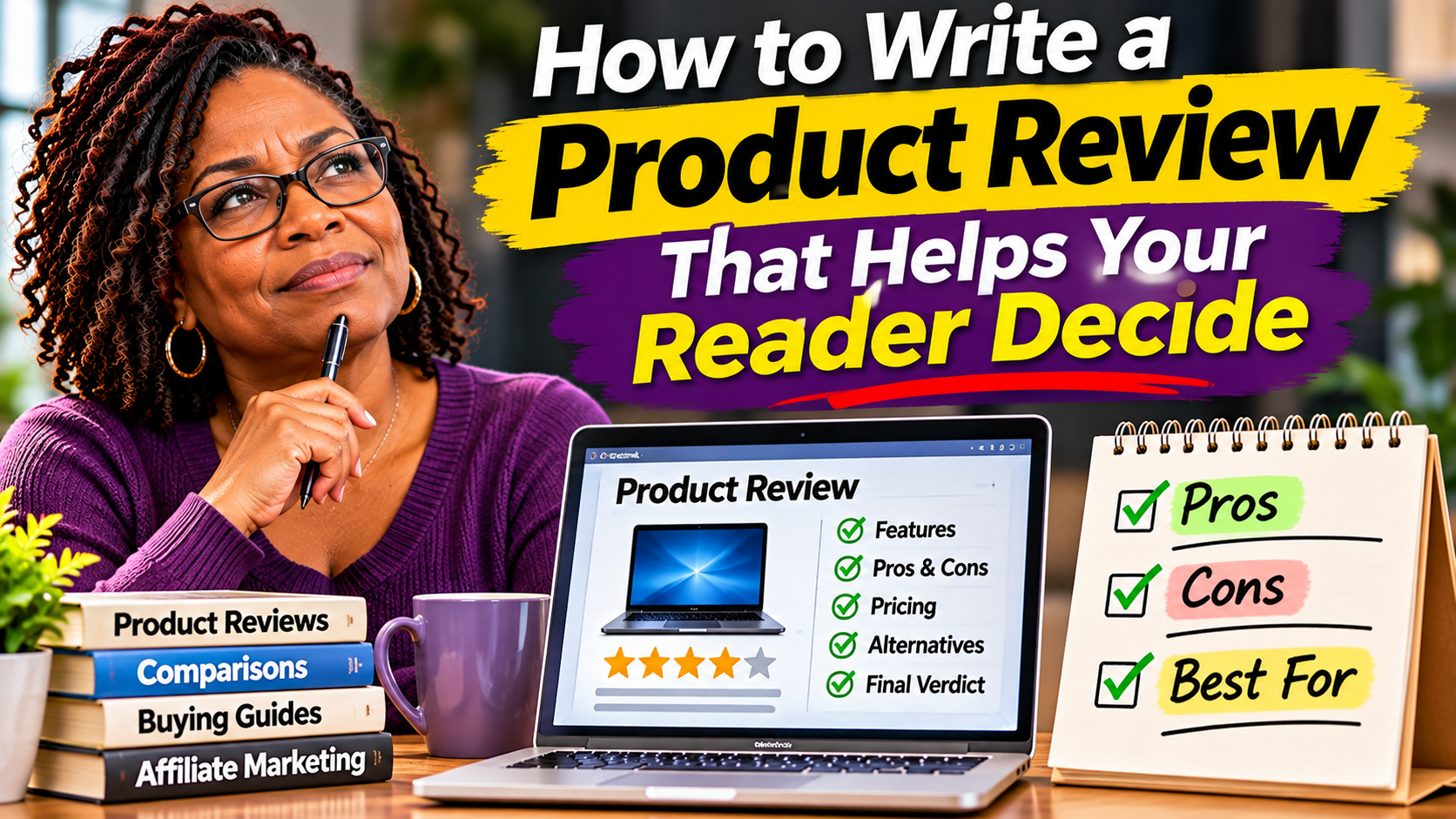
Product Review Writing Template
- Introduction: Explain the problem the reader is trying to solve.
- What the product is: Describe its purpose in plain English.
- Who it’s for: Identify the audience that may benefit.
- Key features: Explain what the features actually mean.
- Hands-on experience or research method: Be transparent about what you’ve tested or verified.
- Pros: Highlight meaningful strengths.
- Cons: Explain relevant limitations.
- Pricing: Discuss costs, renewals, and possible extras.
- Alternatives: Compare other suitable options.
- Final verdict: Explain who should consider it and who should skip it.
- Next step: Include a relevant, clearly disclosed affiliate link if appropriate.
Remember: You don’t have to follow this structure rigidly. The purpose is to make sure your review answers the questions that matter.
11. How to Know Whether Your Review Is Actually Helpful
Before publishing, read your article as if you were considering buying the product yourself.
Ask:
- Do I understand what this product does?
- Do I know who it’s designed for?
- Have the important drawbacks been explained?
- Can I understand the pricing?
- Do I know what alternatives exist?
- Is it clear whether the writer personally tested the product?
- Would this review still be useful if I never clicked an affiliate link?
That last question is especially important.
If your review provides no value unless someone buys something, it probably needs more work.
For more beginner guidance, read my article on seven affiliate marketing myths that waste your first months.
You can also learn more about choosing a niche that fits your interests and audience.
Want to Learn Affiliate Marketing Step by Step?
Writing helpful reviews is just one part of building an affiliate marketing website.
If you’re starting from scratch and want to understand the basics without unrealistic income promises, explore my Quiet Money beginner guide.
Explore the Quiet Money Guide →Frequently Asked Questions
Can I write an affiliate review without buying the product?
Yes, you can create a clearly labeled research-based product overview or comparison. However, you should never imply that you’ve personally tested a product when you haven’t. Be transparent about your sources and the limitations of your research.
How long should a product review be?
There is no required word count. A review should be long enough to answer the reader’s important questions without adding unnecessary filler. Some products need detailed comparisons, while others can be reviewed more concisely.
Should I include negative information in affiliate reviews?
Yes, when it’s accurate and relevant. Explaining real limitations helps readers decide whether a product fits their needs. Avoid exaggerating weaknesses or inventing drawbacks simply to appear balanced.
Can I use AI to write product reviews?
AI can help with planning, organizing, and editing reviews. But you should verify product information, prices, and claims independently. Never publish fabricated testing experiences or unsupported recommendations.
Final Thoughts
A helpful product review isn’t about convincing every visitor to buy something.
It’s about helping the right person make the right decision for their situation.
Sometimes that decision will be to purchase the product you’re recommending.
Sometimes it will be to choose a different product.
And sometimes it will be to wait.
That’s okay.
Because if you want to build an affiliate website that people trust, your recommendations need to be useful even when they don’t result in a commission.
So before you publish your next product review, ask yourself:
Am I helping someone make a decision, or am I just trying to make a sale?
That difference matters.
— Trecia, Success With Trecia
Affiliate Disclosure: Some links on this website may be affiliate links. If you purchase through one of my referral links, I may receive a commission at no additional cost to you. Product information, pricing, and availability can change.