

|
Getting your Trinity Audio player ready...
|
So you’ve heard that people can make money recommending products online.
Maybe you’ve watched a few YouTube videos about affiliate marketing. Maybe you’ve started a website. Or maybe you’re just trying to figure out how the whole thing works.
But there’s one question that often gets skipped.
How do you actually get paid?
Does somebody pay you every time a person clicks your link?
Do you earn money when someone visits a website?
What happens if they buy something three days later?
And why do some affiliate programs pay $5 while others advertise commissions of $100 or more?
Let’s break this down in plain English, because understanding how commissions work can save you a lot of confusion when you’re starting out.
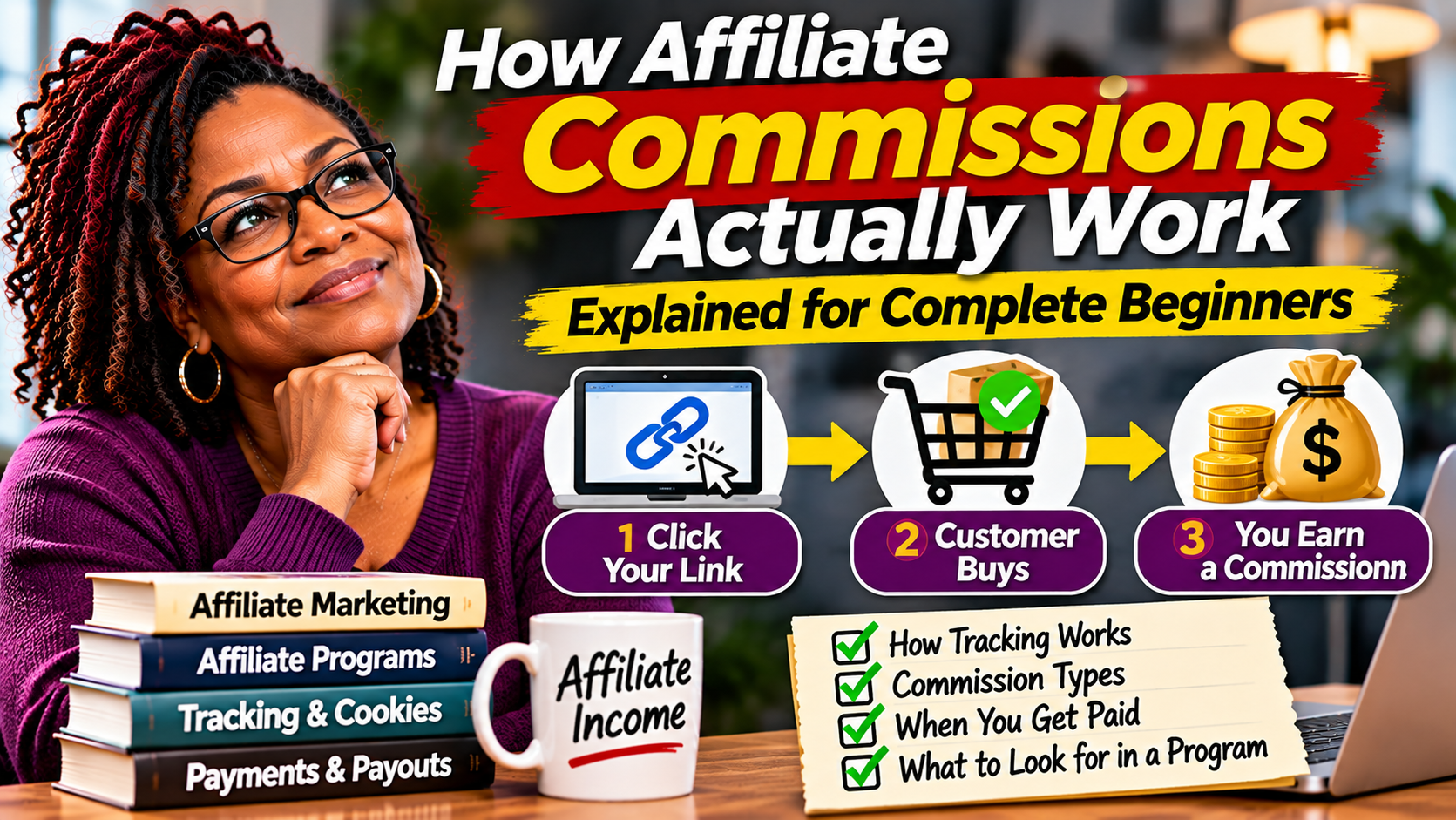
You promote another company’s product or service, and you may earn a commission when someone completes a qualifying action through your tracked referral.
1. What Exactly Is an Affiliate Commission?
An affiliate commission is money a business pays you for generating a qualifying referral.
That referral might result in a purchase, a subscription, a completed application, or another action defined by the affiliate program.
Here’s a simple example.
Imagine you have a blog about home office equipment.
You write an article recommending a computer keyboard that costs $80.
The retailer offers a 5% commission on qualifying purchases.
Someone reads your article, clicks your affiliate link, and purchases the keyboard.
If the purchase qualifies under the program’s rules, your commission would be $4.
That’s the basic idea.
But there’s more happening behind the scenes.
2. What Happens When Someone Clicks Your Affiliate Link?
When you join an affiliate program, you’re usually given a special tracking link.
That link contains information that helps the affiliate program identify you as the person who referred the visitor.
Here’s a simplified example of what a tracking link might look like:
https://example.com/product?ref=youraffiliateid
When someone clicks the link, the affiliate program or its tracking provider may record the referral.
Depending on the program, tracking can involve cookies, referral identifiers, server-side records, or a combination of methods.
If the visitor later completes a qualifying action, the system determines whether the commission should be credited to your account.
But here’s something beginners need to understand.
A click does not automatically mean you’ve earned money.
Most affiliate programs require a purchase or another specified action before a commission is earned.

3. What Is a Tracking Cookie?
You’ve probably heard people talk about affiliate cookies.
And no, we’re not talking about chocolate chip cookies.
A tracking cookie is a small piece of data that a website may store in someone’s browser to help recognize certain activity.
Some affiliate programs use cookies to remember which affiliate referred a visitor.
For example, imagine a program has a 30-day tracking window.
Someone clicks your affiliate link on Monday but doesn’t purchase anything.
Two weeks later, they return and buy the product.
Depending on the program’s attribution rules, consent requirements, browser settings, and whether another referral replaced yours, that purchase might still qualify for your commission.
However, cookies aren’t the only tracking method, and they don’t guarantee that every later purchase will be attributed to you.
Common Tracking Windows
| Example Window | What It Generally Means |
|---|---|
| 24 Hours | A qualifying action generally needs to happen within one day of the referral. |
| 7 Days | The referral may remain eligible for up to one week. |
| 30 Days | The program may attribute qualifying actions within approximately one month. |
| 90 Days | The program may allow a longer period for eligible conversions. |
These are examples, not universal rules. Some programs use different tracking methods, attribution policies, or windows.
Always read the affiliate agreement.
4. The Different Ways Affiliate Programs Pay Commissions
Not every affiliate program pays the same way.
Here are several common payment models.
Pay Per Sale
You earn a commission when someone makes a qualifying purchase.
This is common in retail affiliate programs.
For example, a customer buys a $200 product and the program pays 8%.
Pay Per Lead
You earn a commission when someone completes a qualifying action, such as submitting an eligible lead form or requesting a quote.
Not every form submission qualifies. Programs may have rules about valid contact information, location, eligibility, and duplicate leads.
Recurring Commissions
Some subscription-based programs pay commissions on qualifying recurring payments.
For example, a service might pay a commission when someone signs up and continue paying commissions while that customer remains subscribed.
Other programs pay only once, even when the customer continues their subscription.
Always verify the program’s actual recurring commission terms.
Flat-Rate Commissions
Instead of paying a percentage, a program may pay a fixed amount for each qualifying referral.
For example, a program might offer $25 for an eligible new customer.
The amount stays the same regardless of the purchase price, subject to the program’s rules.
5. Why Do Commission Rates Vary So Much?
You might see one affiliate program paying 3% and another paying 30%.
That doesn’t necessarily mean the higher-paying program is better.
Different businesses have different profit margins, marketing budgets, customer values, and operating costs.
Digital services may have different economics from physical products that require manufacturing, storage, and shipping.
But there’s another important factor.
A high commission is only valuable if the product is appropriate for your audience and the referral actually qualifies.
Imagine promoting a product with a $150 commission that your readers don’t need.
Now compare that with a useful product that pays $15 and genuinely solves a problem for your audience.
The smaller commission may be a more realistic fit for your website.
That’s why I recommend choosing products based on relevance and trust before chasing payout amounts.
6. Why 100 Affiliate Clicks Might Produce Zero Commissions
This is one of the most frustrating experiences for beginners.
You open your affiliate dashboard and see that people are clicking your links.
Finally, something is happening!
But your commission total is still zero.
What’s going on?
There are several possible explanations.
- Visitors clicked out of curiosity but weren’t ready to buy.
- The product wasn’t a good fit for their needs.
- The price was higher than expected.
- They decided to compare other products.
- The purchase didn’t meet the program’s qualification rules.
- The referral wasn’t attributed to your account.
- The customer abandoned the purchase before completing checkout.
Clicks are useful information, but they aren’t the same as sales.
Instead of focusing only on click counts, pay attention to whether you’re attracting people who genuinely need the products you’re recommending.
Imagine 100 visitors click your affiliate link and two make qualifying purchases.
If each purchase earns a $10 commission, you would earn $20 before any applicable adjustments.
That’s a hypothetical example, not a typical or guaranteed conversion rate.

7. What Happens If the Customer Returns the Product?
Here’s something that surprises many beginners.
Seeing a commission appear in your dashboard doesn’t always mean the money is yours to keep.
Some affiliate programs initially mark commissions as pending.
They may wait until the refund or cancellation period has passed before approving payment.
If a customer returns the product, cancels the service, or the transaction violates the program’s terms, the commission may be reversed.
For example:
- A customer purchases a product.
- Your dashboard shows a pending $20 commission.
- The customer returns the product.
- The program reverses the commission under its rules.
That’s why it’s important to understand the difference between pending, approved, and paid commissions.
8. When Do Affiliate Programs Actually Pay You?
Every affiliate program has its own payment schedule.
Some pay monthly.
Others pay after a holding period.
Some require you to reach a minimum balance before they release payment.
Let’s say a program has a $50 minimum payout threshold.
If you have $35 in approved commissions, you may need to wait until you earn enough to reach the threshold.
Depending on the program, payments may be made through bank transfer, PayPal, or another supported method.
You may also need to provide tax information and complete identity or payment verification.
- How often payments are issued.
- The minimum payout threshold.
- How long commissions remain pending.
- Which payment methods are supported.
- Whether there are payment fees.
- What happens to unpaid commissions if your account closes.
These details matter, especially when you’re trying to manage business expenses.
9. A Simple Example of Affiliate Earnings
Let’s put everything together with a hypothetical example.
Imagine you have a blog recommending home office products.
During one month:
- 500 people visit your website.
- 100 people click affiliate links.
- Five visitors make qualifying purchases.
- Each purchase earns an approved $12 commission.
Your gross affiliate commissions would be $60.
But that isn’t necessarily your profit.
If you’re paying for website hosting, software, advertising, or other business expenses, those costs still matter.
And depending on your circumstances, taxes may apply to your earnings.
For example, if you earned $60 in approved commissions and spent $25 on business expenses, the simple difference would be $35 before taxes and any other costs.
That’s why beginners should track both revenue and expenses.
10. How to Choose Your First Affiliate Program
If you’re just starting out, don’t rush to join every affiliate program you find.
Start by understanding your audience.
What are they trying to accomplish?
What products or services could genuinely help them?
Then research affiliate programs that fit those needs.
Beginner Affiliate Program Checklist
- Does the product solve a real problem for my audience?
- Is the company reputable?
- How much is the commission?
- What actions qualify for payment?
- How are referrals tracked?
- How long is the tracking window?
- When are commissions approved?
- What is the minimum payout?
- Are there advertising or promotional restrictions?
- What happens when a customer requests a refund?
You can also read my guide on how to write product reviews that help readers make decisions.
Helpful reviews can give visitors the information they need before clicking an affiliate link.
11. Do You Need a Website to Earn Affiliate Commissions?
Not necessarily.
Some affiliate programs allow promotion through YouTube, social media, newsletters, or other approved channels.
However, each program has its own rules.
Some require a functioning website or an established audience before approving an application.
Others restrict certain promotional methods.
A website can be useful because it gives you a place to publish detailed reviews, comparisons, and educational content.
But a website alone doesn’t guarantee visitors or commissions.
If you’re interested in building one, read my beginner’s guide to creating your first affiliate website.
12. Don’t Forget Affiliate Disclosures
If you earn commissions by recommending products, readers should understand that relationship.
In the United States, the Federal Trade Commission expects material connections between endorsers and advertisers to be disclosed clearly and conspicuously.
That means you shouldn’t hide your affiliate disclosure where readers are unlikely to notice it.
Place a clear disclosure near your recommendations and affiliate links.
“This article contains affiliate links. If you purchase through one of my links, I may earn a commission at no additional cost to you.”
Also, don’t recommend products solely because they pay higher commissions.
Readers are trusting you to help them make informed decisions.
13. What Beginners Should Focus on Before Their First Commission
It’s easy to become obsessed with the money.
Every day you check your affiliate dashboard, hoping to see that first commission.
But if you’re brand new, I recommend focusing on building the skills that make affiliate marketing possible.
Learn how to research an audience.
Learn how to answer useful questions.
Learn how to compare products fairly.
Learn how to understand traffic and affiliate reports.
And learn how to recognize whether a product is actually a good fit for the people visiting your website.
Those skills won’t guarantee commissions, but they’re more valuable than simply collecting affiliate links.

Want to Learn Affiliate Marketing From the Beginning?
Understanding commissions is just one part of building an online business.
If you’re completely new and want to learn how affiliate marketing works, how websites are built, and what tools beginners should consider, explore my Quiet Money guide.
Explore Quiet Money →Frequently Asked Questions
Do affiliate marketers get paid for clicks?
Some programs use pay-per-click arrangements, but many affiliate programs pay only when a visitor completes a qualifying action, such as a purchase or eligible lead submission.
How much can a beginner earn from affiliate marketing?
There is no guaranteed amount. Earnings depend on factors such as audience demand, traffic, conversion rates, commission structures, and expenses. Many beginners earn little or nothing while learning.
Can someone buy later and still earn me a commission?
Possibly. It depends on the affiliate program’s tracking window, attribution rules, and whether the transaction meets its requirements.
Why is my affiliate commission still pending?
Programs may hold commissions while verifying transactions, checking for refunds, or completing other approval steps. Review the program’s payment and approval policies.
Do I have to pay to join an affiliate program?
Many legitimate affiliate programs are free to join. Be cautious about programs that require substantial payments simply for the opportunity to recruit others or earn commissions.
Final Thoughts
Affiliate marketing isn’t just about posting links and waiting for money to appear.
There’s a process behind every commission.
Someone discovers your content.
They decide whether your recommendation is useful.
They click your referral link.
They complete a qualifying action.
And the affiliate program determines whether the referral meets its rules for payment.
Once you understand that process, affiliate marketing starts making a lot more sense.
And instead of asking, “Why am I not making money yet?” you can start asking better questions about your audience, traffic, and recommendations.
Because understanding how the business works is the first step toward making better decisions about building one.
— Trecia, Success With Trecia
Affiliate Disclosure: Some links on this website may be affiliate links. If you purchase through one of my referral links, I may earn a commission at no additional cost to you. Affiliate earnings are not guaranteed.