
|
Getting your Trinity Audio player ready...
|
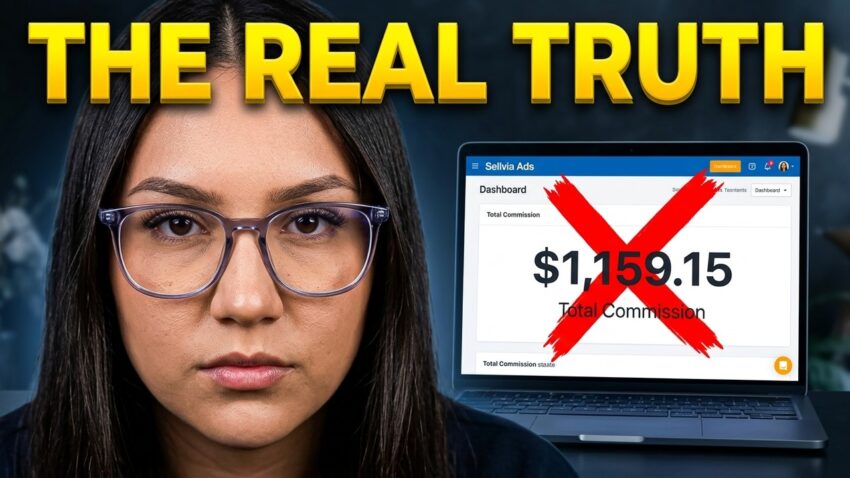
I Tried Sellvia for 30 Days: My Dashboard Said $1,159.15 in Sales… Here’s What I Actually Got
I signed up because I kept seeing Sellvia promoted as an easy way to start dropshipping. I decided to put it to the test myself. What happened after the orders started coming in completely changed my opinion of the platform.
Watch My Actual Sellvia Account Review
This isn’t a review based solely on Sellvia’s sales page. In the video below, I log into the account I used, show the dashboard and walk through what happened with my orders, advertising, payouts and money.
Would I Recommend Sellvia? No.
I didn’t lose confidence in Sellvia simply because I didn’t become rich in 30 days.
I know better than that.
My problem was understanding where the money was actually going.
My dashboard showed $1,159.15 in total sales from 85 orders, but that number did not represent $1,159.15 sitting in my bank account as profit.
Once I started looking at the money I was personally spending to process orders, advertising costs, payout requirements, fees, reserves and the money I could actually withdraw, the picture looked VERY different.
Why I Decided to Try Sellvia
Sellvia was advertising heavily when I decided to try it.
And the pitch sounded good.
Start a dropshipping store.
No warehouse.
No boxes sitting in your living room.
Sell products online.
The supplier handles fulfillment.
Potentially build another stream of income.
Okay.
I’m always reviewing ways people can make money online, so instead of sitting on YouTube talking about something I’d never used, I decided:
So I did.
I used Sellvia for approximately one month.
Then the Orders Started Coming In
I signed up at night.
When I woke up the next morning, I already had several sales showing in the store.
Now you KNOW what I was thinking.
But that excitement didn’t last very long.
Because I quickly discovered there was another part of the process I needed to understand:
Processing the orders.
Here’s Where I Started Getting Confused
The basic dropshipping model most beginners understand goes something like this:
A customer purchases an item from your store for $10.
The supplier cost is $5.
You use part of the customer’s payment to pay the supplier.
The difference, after all applicable expenses, contributes toward your gross profit.
Of course real ecommerce has other costs, including advertising, payment processing, refunds, subscriptions, taxes and other expenses.
But here’s what caught me off guard with my Sellvia experience:
When an order appeared, I had to provide money to process that order.
Meanwhile, the dashboard was showing sales revenue.
That’s when I started asking:
There may be an accounting and payment-processing explanation for the way Sellvia structures this system.
But as a beginner using the platform, I found the cash flow confusing, and that’s an important distinction.
My Sellvia Numbers After the Orders Came In
This is where I want to get away from hype and talk about what my dashboard actually showed when I recorded my review.
Now look at those numbers.
If somebody only showed you:
“$1,159.15 IN SALES!”
you might think:
“Trecia made over a thousand dollars.”
No ma’am.
That’s exactly why revenue and profit cannot be treated as the same thing.
$1,159.15 in Sales Did NOT Mean I Made $1,159.15
This is probably the most important part of my entire Sellvia review.
The dashboard’s sales number looked impressive.
But I also had money going OUT.
I was funding order processing.
I was paying for advertising separately.
There were fees to consider.
There was money that wasn’t immediately available for withdrawal.
And there was a recurring subscription to consider.
Revenue ≠ Profit
Revenue is the money generated from sales.
Profit is what’s left after your legitimate business expenses are accounted for.
A dashboard showing thousands of dollars in sales can look wonderful while the actual business is making very little profit or even losing money.
Then There Was the Advertising
During my review, my account showed approximately $190 associated with advertising.
And this mattered to me because the advertising money was coming out of my real checking or savings account.
It wasn’t imaginary dashboard money.
It was MY money.
Advertising itself isn’t a scam.
Businesses advertise every single day.
But advertising completely changes the profitability equation.
That’s the number beginners need to pay attention to.
My Dashboard Showed $1,159.15 in Sales. I Had Withdrawn $58.16.
This was one of the biggest reasons I became frustrated.
At the time I recorded the video, I showed that I had successfully withdrawn $58.16.
Other money appeared in different areas or stages of the account.
And I was trying to understand:
Where is the rest of the money?
That’s when payout rules, processing periods and reserves became VERY important.
The Risk Reserve Really Got My Attention
During my experience, I showed approximately $250 associated with risk reserves in the account and discussed a portion of funds being held for an extended period.
Sellvia’s current terms should always be checked because policies can change.
But the larger lesson remains:
Before joining ANY platform, find out:
- When sales become available for withdrawal
- Whether a reserve is held
- How long reserves can be held
- Whether there is a minimum payout
- Whether your subscription must remain active
- What fees apply when withdrawing
- What happens to pending money if you cancel
Don’t Forget the Monthly Subscription
The Sellvia subscription I discussed was $39 per month following the trial period.
Thirty-nine dollars by itself might not sound like a lot.
But that’s not how you evaluate a business.
You have to add EVERYTHING.
Order costs.
Advertising.
Processing fees.
Optional services.
Subscription costs.
Any payout-related costs.
And anything else you’re paying to operate.
Then compare all of that against the money that actually reaches you.
Another Thing I Didn’t Like: So Many Opportunities to Spend More Money
Inside the platform, I saw numerous opportunities to purchase additional products, collections, services and automation.
And this is another place beginners can get into trouble.
One upgrade doesn’t sound expensive.
Then another one doesn’t sound expensive.
Then another one.
Then advertising.
Then automation.
Then the subscription.
And suddenly your “$39 business” isn’t costing $39 anymore.
Calculate the total cost of operating the business.
The Digital Products Raised Another Question for Me
In my particular store, the products being sold during the period I showed were overwhelmingly, and from what I observed possibly entirely, digital products.
That made the reserve structure even more confusing to me.
I questioned why money associated with those transactions needed to remain reserved for such a long period when the store’s customer-facing policies restricted refunds and returns.
There may be reasons involving payment disputes, chargebacks, fraud prevention or other risks even with digital products.
But as the person putting my money into this business, I wanted the cash-flow mechanics explained much more clearly.
Then I Started Reading Other Sellvia Complaints
This is when things became even more concerning to me.
I started researching what other customers were reporting.
Some people have positive experiences with Sellvia.
That needs to be acknowledged.
But I also found consumers alleging experiences involving:
⚠️ Unexpected or misunderstood charges
⚠️ Recurring subscription issues
⚠️ Additional advertising expenses
⚠️ Order-processing costs
⚠️ Difficulty understanding balances
⚠️ Funds or commissions being held
⚠️ Withdrawal requirements
⚠️ Refund and cancellation disputes
⚠️ Upsells and additional services
Those are allegations made by individual consumers.
I’m not presenting every complaint on the internet as proven fact.
But when I started seeing other people describe issues that sounded similar to questions I was already asking about my own account, I paid attention.
What Does Sellvia Say?
There are two sides to this.
Sellvia has publicly responded to customer complaints and has argued that people need to distinguish between revenue and profit.
And on that specific point, they’re right.
Revenue and profit ARE different.
Sellvia has also said in responses to complaints that expenses such as deposits and advertising can be part of operating an ecommerce business, and that some services and upgrades are optional.
The company has pointed customers toward alternatives such as independently managing advertising, using different payment arrangements where available, or manually processing orders.
And in some public complaints, Sellvia has reported issuing refunds or attempting to resolve the customer’s problem.
I think readers deserve to know that too.
So Why Am I Still Giving Sellvia a Negative Review?
Because I’m not evaluating whether it’s technically possible to operate a business through the platform.
I’m telling you what the experience was like for ME as the customer.
I went into this thinking I was testing a relatively straightforward dropshipping business.
I came out watching money move through order processing, advertising, different balance categories, reserves and fees while a large sales figure sat at the top of my dashboard.
And I did not like the economics I was seeing.
So…Is Sellvia a Scam?
I know that’s why many of you clicked this article.
Based on MY experience, I used the word “scam” in my video because that’s how the experience felt to me after seeing the money going in, the dashboard sales figures and what I could actually access.
But there’s an important legal distinction.
Sellvia is an operating ecommerce company.
I have not seen evidence establishing that a court or regulator has legally determined that Sellvia as a company is fraudulent.
Consumer complaints alone don’t prove fraud either.
So I’m not going to tell you:
I cannot substantiate that statement.
What I CAN substantiate is my experience.
I used the platform.
I spent my own money.
I generated orders.
I watched the dashboard.
I processed orders.
I paid for advertising.
I dealt with the payout structure.
And after approximately a month, I decided this was not a business model I wanted to continue with.
The Biggest Lesson I Learned From Sellvia
Please stop letting online-business companies hypnotize you with revenue screenshots.
A screenshot that says:
“$10,000 IN SALES!”
tells you almost NOTHING by itself.
I want to know:
How much did you spend on ads?
How much did the software cost?
What were the processing fees?
What were the payment fees?
Were there refunds or chargebacks?
How much money is being held?
How much is actually withdrawable?
And finally…HOW MUCH ENDED UP IN YOUR BANK ACCOUNT?
Now we’re talking about a business.
Before You Sign Up for Sellvia, Ask These Questions
If you’re still considering Sellvia after reading my experience, don’t join based solely on anybody’s advertisement, including mine or another YouTuber’s review.
Read the current agreement and make sure you understand the current rules around:
- Monthly subscription pricing
- Trial expiration
- Automatic renewal
- Order processing
- Advertising costs
- Optional services and upgrades
- Commission calculations
- Available versus pending balances
- Risk reserves or validation periods
- Minimum payout amounts
- Payout fees
- Refund eligibility
- Cancellation
- What happens to pending funds after cancellation
And screenshot the terms you agree to.
Companies change terms.
You want a record of what YOU agreed to on the date YOU joined.
Would I Join Sellvia Again?
And I would not recommend it to my audience based on the experience I had.
That doesn’t mean every person who uses Sellvia will have my experience.
It doesn’t mean nobody has ever made money using the platform.
It means that after testing it with my own money, watching the sales come in and then looking closely at the actual cash flow, I personally decided the opportunity wasn’t worth continuing.
And THAT is why I test these things instead of just repeating what’s on the sales page.
About Success With Trecia
Success With Trecia is about looking beyond the hype surrounding online business opportunities, software, AI tools and side hustles.
Sometimes I find something I like. Sometimes I find something I don’t. Either way, my goal is to show you what I find so you can make a more informed decision before spending your money.
Sellvia Review FAQ
Is Sellvia a scam?
I personally characterized my Sellvia experience as scam-like and used the word “scam” in my video because of my experience with the money flow, costs and payout structure. However, I have not seen a court or regulator determination establishing that Sellvia as a company is fraudulent. Other customers may have different experiences.
Did I actually use Sellvia?
Yes. This review is based on approximately one month of my personal use of the platform. My accompanying YouTube video shows the Sellvia account and dashboard I used during my test.
How much did my Sellvia store show in sales?
When I recorded my review, my dashboard showed $1,159.15 in total sales across 85 orders.
Did I make $1,159.15 in profit?
No. The $1,159.15 figure represented displayed sales, not my net profit. I also had order-processing costs, advertising expenses and other business costs to consider, and not all money shown in the account was immediately available to withdraw.
How much had I withdrawn?
At the point shown in my video, I had withdrawn $58.16. Other amounts were displayed in different balance or processing categories.
Why did I have to put money into Sellvia orders?
In the workflow I experienced, I needed to fund the processing of customer orders. One of my biggest frustrations was understanding how the customer payment, order-processing cost, commissions and eventual payout interacted. Anyone considering Sellvia should understand the current cash-flow process before joining.
Does Sellvia require advertising?
Advertising is one way of generating ecommerce traffic, and my own test involved paid advertising. Advertising costs can substantially affect profitability. Check Sellvia’s current options because some advertising and managed services may be optional.
Would I personally use Sellvia again?
No. Based on the experience documented in my review, I would not personally use Sellvia again or recommend it to my audience.
Before You Buy the Next Online Business Opportunity…
Come check Success With Trecia first. I research online opportunities, AI tools, software and side hustles so we can look beyond the income claims and talk about what you’re actually getting.
Explore Success With Trecia →Editorial Disclaimer: This article includes my personal experience, opinions and observations from my use of Sellvia. Account figures represent what was displayed during the period documented in my video and should not be interpreted as typical results. References to experiences reported by other consumers describe their allegations and opinions and do not independently establish wrongdoing. When I use terms such as “scam” or “scam-like” to describe my own experience, I am expressing my opinion and am not stating that Sellvia has been legally determined to have committed fraud. Pricing, fees, payout policies, subscriptions, platform functionality and terms may have changed since my experience. Review Sellvia’s current terms before making a purchasing decision.