
|
Getting your Trinity Audio player ready...
|
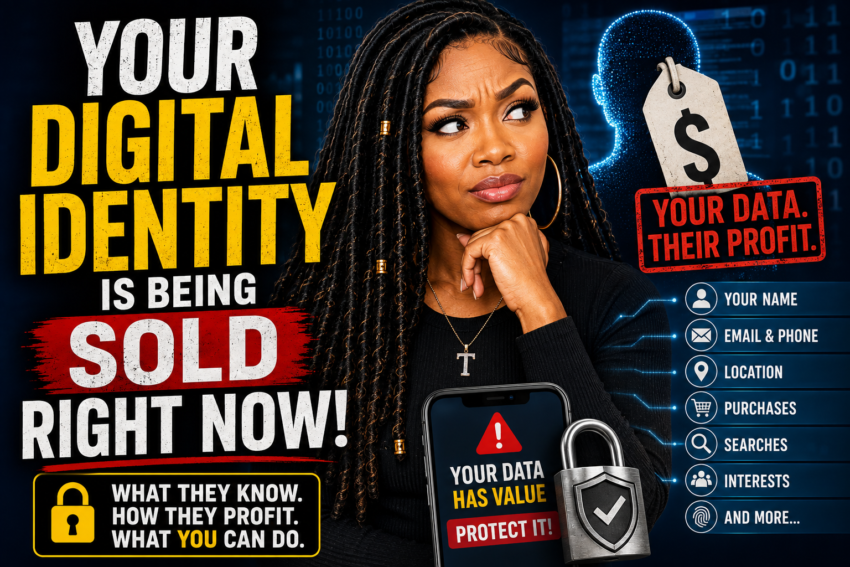
Your Digital Identity Is Being Sold Right Now
Your name isn’t the only thing companies may know about you. Your searches, purchases, devices, interests, location-related information and online behavior can all help create a valuable digital profile.
▶ Watch the Video 🔒 Protect Your Data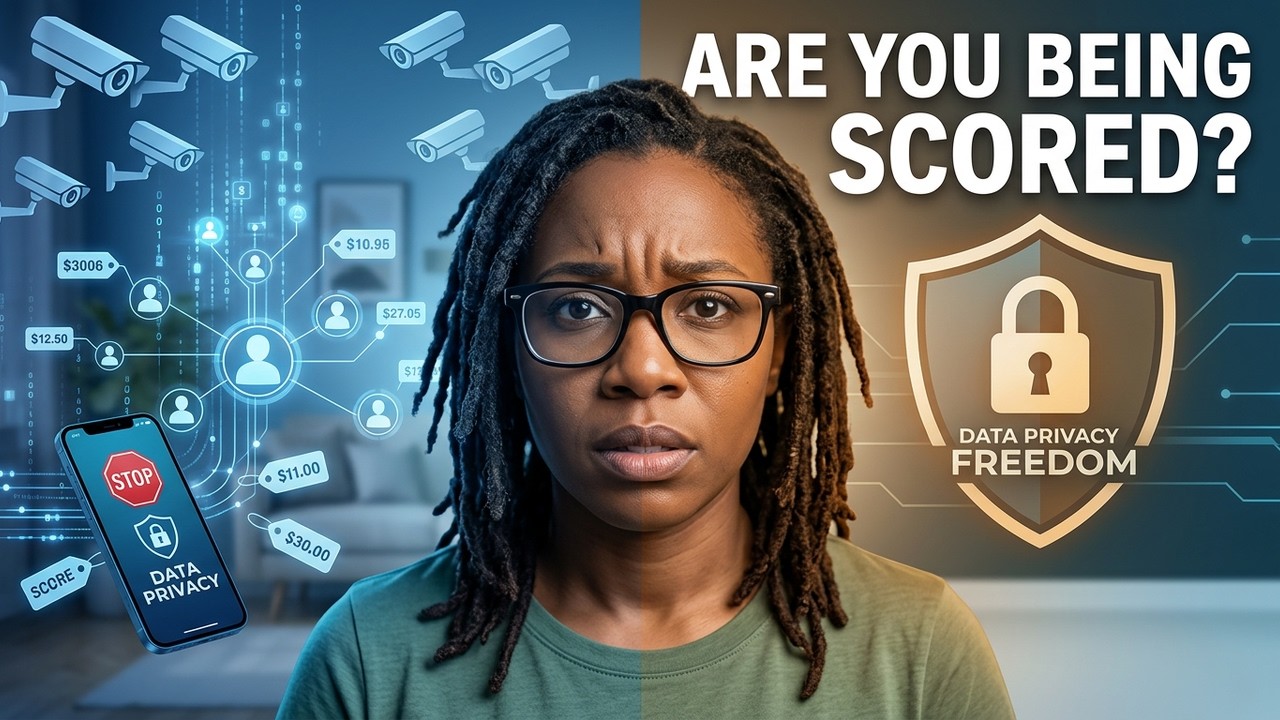
You probably wouldn’t hand a stranger a folder containing information about your life.
Your phone number.
Your email addresses.
What you search for online.
What you buy.
What kind of car you drive.
The websites you visit.
Your interests.
And information that can be used to make assumptions about who you are.
But pieces of that digital profile can already exist in databases you may have never heard of.
Welcome to the world of data brokers.
🎥 Watch: Your Digital Identity Is Being Sold Right Now
Watch my video below, then keep reading because I’m going to explain what a digital identity actually is, how data brokers work and what you can do about it.
🚨 First: What Is a Data Broker?
A data broker is generally a company that collects information about consumers and makes that information available to other parties even though the consumer may not have a direct relationship with the broker.
California’s privacy regulator defines a data broker as a business that knowingly collects and sells personal information about consumers with whom it does not have a direct relationship.
What Is Your “Digital Identity”?
I’m using the phrase digital identity broadly here.
Think of it as the collection of information, identifiers, behaviors and assumptions that can be associated with you online.
One company might only know one small piece.
Another might know something else.
But when information is combined, it can potentially create a much more detailed picture.
Little Pieces of Data Can Build a Bigger Profile
Devices + Searches + Purchases + Interests + Identifiers + Other Data
What Kind of Information Can Be Collected?
The exact information varies enormously depending on the company and how the data was obtained.
But data connected to consumers can include things such as:
Names, contact information, dates of birth and other identifiers.
Email addresses, phone numbers and mailing information.
Browsing or search-related information in some datasets.
Purchasing interests, shopping behavior and other commercial data.
Advertising IDs and other identifiers associated with devices.
Assumptions or classifications created from other information.
Wait…Companies Can Make Assumptions About Me?
Yes, and this is one of the parts people don’t always think about.
A dataset doesn’t necessarily have to contain only things you directly told somebody.
Companies can potentially use existing information to create inferences.
In other words:
Your data can potentially be used to predict something about you.
That distinction matters because a digital profile can include not only facts, but also conclusions generated from those facts.
How Did They Get My Information?
That’s the million-dollar question.
Data can come from many different sources depending on the broker and dataset.
That can potentially include:
- Publicly available records
- Websites and apps
- Advertising technologies
- Commercial transactions
- Other businesses
- Surveys and forms
- Device identifiers
- Other data providers
And once information moves through several companies, figuring out where one particular piece originally came from can become difficult.
The Data Economy
Consumer → Digital Activity → Data → Broker/Platform → Business Use
Why Would Anybody Want My Data?
Because information can have commercial value.
Businesses want to know who might be interested in their products.
Advertisers want better targeting.
Companies may want to verify identities or assess risks.
Other organizations may use consumer information for analytics, marketing, fraud prevention and other purposes.
Your information can help companies make decisions—and decisions can be worth money.
This Goes Beyond Targeted Ads
Most of us already know the feeling.
You search for something…
And suddenly you start seeing ads for it everywhere. 😂
But consumer-data ecosystems can involve far more than advertising.
The Consumer Financial Protection Bureau points out that the three big credit bureaus aren’t the only companies maintaining consumer information. Numerous specialized consumer-reporting companies collect information in particular industries and market segments.
🔎 Did You Know There Are Consumer Reports Beyond Your Credit Report?
The Consumer Financial Protection Bureau maintains a list of consumer-reporting companies and explains how consumers can request information about reports maintained about them.
See the CFPB Consumer Reporting List →Why AI Makes Your Data Even More Important
AI is incredibly good at finding patterns.
And what does AI need to find patterns?
DATA.
Large datasets can make it easier to categorize people, predict behavior, personalize content and automate decisions.
That doesn’t mean every company has a secret AI file containing your entire life.
But it does mean the value of high-quality consumer data may increase as businesses find more sophisticated ways to analyze it.
Data + AI = More Powerful Analysis
The more information a system can analyze, the more detailed its predictions and classifications can potentially become.
Could Your Data End Up in the Wrong Hands?
That’s another reason privacy matters.
Even when information was originally collected for legitimate commercial purposes, large databases can create security and privacy risks.
Data breaches happen.
Accounts get compromised.
Scammers buy information.
People get impersonated.
And AI can make impersonation more convincing through fake voices, fake images and highly personalized scams.
The more a scammer knows about you, the easier it can be to make the scam feel believable.
🚨 Imagine This Scam
Someone knows your name.
They know your phone number.
They know the names of people connected to you.
They know something you’ve recently been interested in.
Then AI generates a convincing message or voice.
Suddenly that scam feels a whole lot more personal.
🔒 So How Do You Protect Your Digital Identity?
You probably can’t disappear completely from the modern data economy.
But you can reduce unnecessary exposure.
1. Stop Giving Every App Every Permission
When an app asks for:
- Your contacts
- Your precise location
- Your microphone
- Your photos
- Your camera
Ask yourself:
Does this app actually need that permission to do its job?
If not, consider saying no.
2. Review Your Phone’s Privacy Settings
Go through the privacy settings on your phone periodically.
Look at which apps have access to sensitive information and remove permissions you no longer want them to have.
3. Use Different Passwords
Don’t use the same password everywhere.
If one service suffers a breach, reused credentials can potentially put additional accounts at risk.
A reputable password manager can make unique passwords much easier to manage.
4. Turn On Multi-Factor Authentication
Whenever possible, add another layer of protection beyond your password.
For especially important accounts, consider stronger authentication methods such as authenticator apps or security keys when available.
5. Think Before Taking Those Fun Online Quizzes
“What was your first car?”
“What was your childhood nickname?”
“What street did you grow up on?”
Wait a minute… 😂
Those can look suspiciously similar to information sometimes used in account-recovery questions.
You don’t need to publicly answer everything the internet asks you.
6. Check What Information Is Publicly Available About You
Search your name occasionally.
Look at people-search websites.
Review old social-media accounts.
Check what your current profiles expose publicly.
You may be surprised by what’s visible.
7. Opt Out Where You Can
Depending on where you live and which company has your information, you may have legal rights to request access, correction, deletion or restrictions on certain uses or sales of personal information.
The rules vary by jurisdiction, so check your state’s official privacy resources.
🔥 A Major Privacy Change Just Took Effect in 2026
California launched a system called DROP — the Delete Request and Opt-out Platform.
Instead of finding individual data brokers one by one, eligible California residents can submit a single request covering more than 600 registered data brokers.
Data brokers began processing those deletion requests on August 1, 2026.
See California’s Official DROP System →Why California’s DROP System Is Such a Big Deal
Normally, removing yourself from data-broker databases can involve finding companies individually and submitting separate requests.
DROP changes that model for California residents.
ONE deletion request → 600+ registered data brokers
California says consumers only need to submit the request once. Registered brokers are required to repeatedly process deletion requests, helping keep matching information deleted if it is collected again later, subject to legal exemptions.
The state says DROP can cover personal information including sensitive and inferred information held by participating data brokers.
But I Don’t Live in California…
That doesn’t mean you should ignore this.
Privacy rights in the United States are changing quickly, and requirements vary from state to state.
Even without a one-stop deletion tool like California’s, you can still investigate individual companies, review their privacy policies and look for available opt-out or deletion mechanisms.
🤖 Technology Is Changing FAST
AI isn’t just changing how we create content. It’s changing marketing, business, automation and the value of digital information.
I cover AI tools, online business, digital marketing and what’s happening behind the technology here on Success With Trecia.
Explore More on Success With Trecia →10 Things You Can Do TODAY
✅ Change passwords you’ve reused.
✅ Enable multi-factor authentication.
✅ Delete apps you no longer use.
✅ Review app permissions.
✅ Turn off unnecessary location access.
✅ Search your own name online.
✅ Review your social-media privacy settings.
✅ Unsubscribe from companies you no longer use.
✅ Investigate data-broker opt-out options available to you.
✅ Stop giving websites information they don’t actually need.
Frequently Asked Questions
What is a data broker?
A data broker generally collects consumer information and makes or sells that information to other parties even though the consumer may not have a direct relationship with the broker.
Is selling personal data legal?
The answer depends on the type of data, how it was collected, how it is used and which privacy laws apply. Consumers in some states have specific rights regarding access, deletion, sharing and sale of personal information.
What information can data brokers have?
Depending on the broker, information may include contact information, identifiers, commercial information, online activity, public information and inferred information.
Can I make data brokers delete my information?
Your rights depend on applicable privacy law. Some states give consumers deletion and opt-out rights. California’s DROP system, for example, lets eligible residents submit one deletion request to hundreds of registered data brokers.
Does deleting my data from brokers remove everything about me online?
No. Data-broker deletion requests don’t necessarily remove public records, information you provided directly to other companies, or information that is legally exempt from deletion.
Why should I care about my digital identity?
Information connected to you can affect advertising, personalization, fraud risk and other automated or human decisions. Understanding what you share gives you more control over your privacy and security.
Final Thoughts
I don’t want you to leave this article scared of technology.
I want you to leave it more aware.
Because most of us spent years clicking:
“Accept All.”
Signing up.
Downloading apps.
Giving permissions.
Posting publicly.
And never really thinking about where all that information might eventually go.
Your data has value.
Start treating it like it does.
Before You Click “Accept All” Again…
Take five seconds and ask yourself what you’re agreeing to share.
▶ Watch My Full Video More From Success With Trecia →