
|
Getting your Trinity Audio player ready...
|
The End of Modern Living? Climate Migration Explained
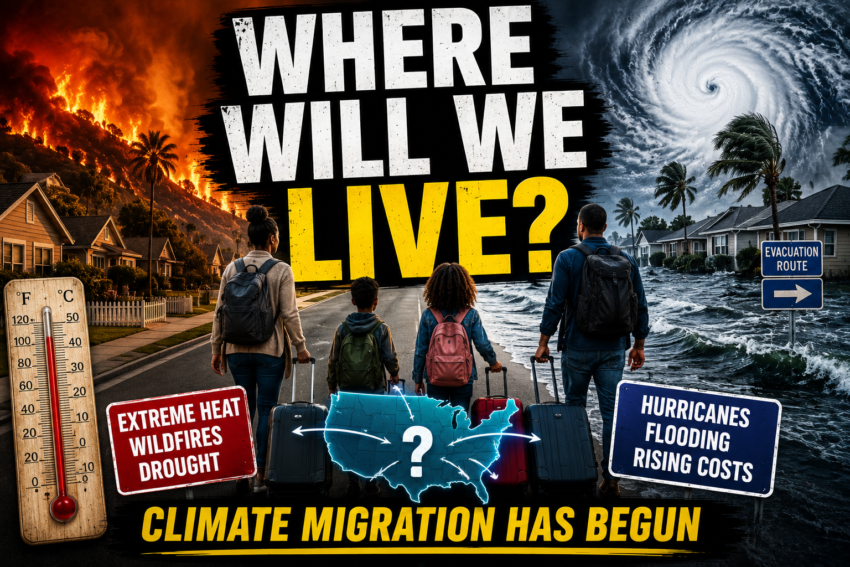
What happens when extreme heat, hurricanes, wildfires, flooding and rising costs make certain places harder—or simply too expensive—to live in? Climate migration may change where Americans choose to call home.
▶ Watch the Video 🌎 What Is Climate Migration?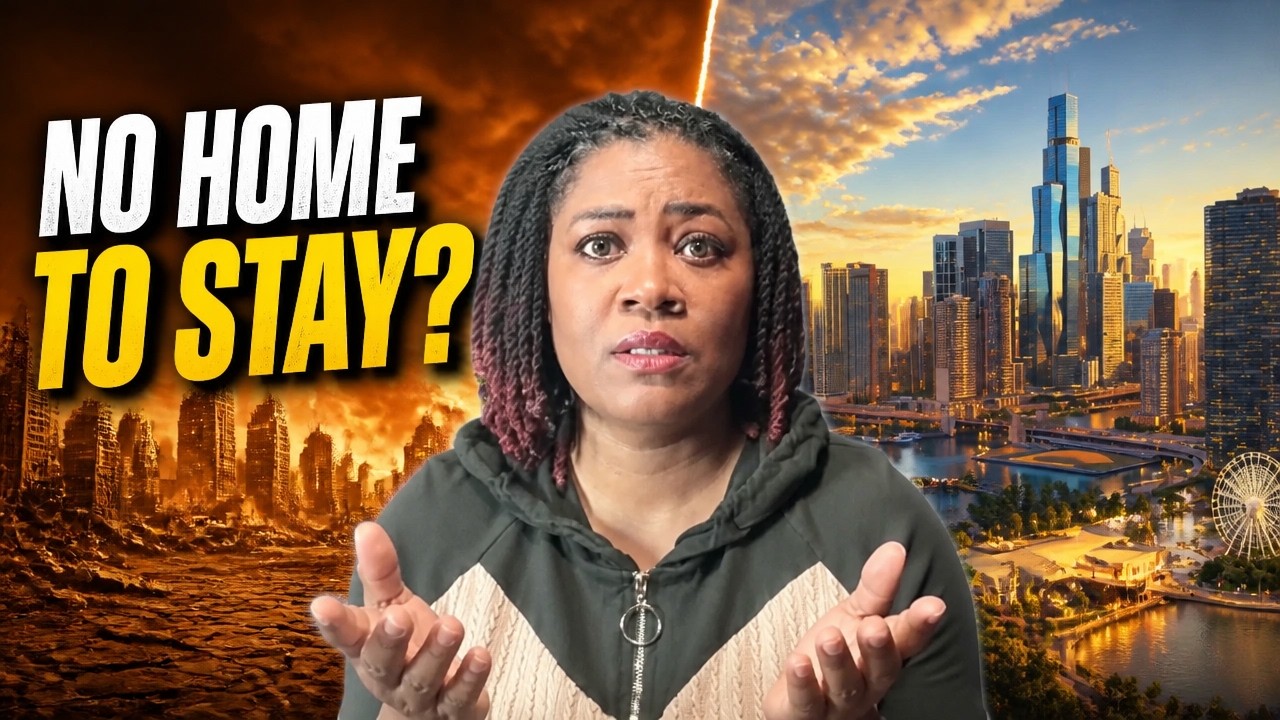
Imagine buying your dream home.
You finally get the house.
Nice neighborhood.
Good schools.
You’ve got your little patio set outside.
You’re planning to stay there for the next 30 years.
Then something changes.
Your insurance gets more expensive.
The neighborhood floods again.
Summer temperatures become harder to tolerate.
Wildfire smoke becomes a regular problem.
Or another hurricane comes through and you’re asking yourself:
“Do I REALLY want to rebuild here again?”
That’s when climate change stops being something happening “somewhere else.”
It becomes a housing decision.
A money decision.
And sometimes…
A moving decision.
🎥 Watch: The End of Modern Living?
In my video below, I break down climate migration and why extreme weather could influence where millions of people choose to live in the future.
🌎 What Is Climate Migration?
Climate migration describes people relocating partly or primarily because environmental conditions are making their current location increasingly difficult to live in.
That doesn’t always mean somebody wakes up and says:
“Climate change! I’m moving tomorrow.”
Usually it’s more complicated.
Maybe the house floods twice.
Maybe insurance becomes unaffordable.
Maybe there’s another wildfire evacuation.
Maybe extreme heat makes daily life miserable.
Maybe water becomes an increasing concern.
Maybe rebuilding becomes financially impossible.
Eventually the family says:
“Maybe we should live somewhere else.”
THAT is climate migration.
This Isn’t Just About Rising Sea Levels
When people hear “climate migration,” they often picture coastal cities disappearing underwater.
That’s only one possible pressure.
People can face climate-related relocation pressure from:
Flooding
Repeated flooding can make homes costly to repair and difficult to insure.
Wildfires
Fire risk can threaten homes, communities and air quality.
Extreme Heat
Longer or more intense heat can increase health risks and cooling costs.
Hurricanes
Repeated storm damage can make rebuilding increasingly difficult.
Water Stress
Drought and water availability can affect households, agriculture and communities.
Cost
The financial consequences of risk can influence whether families remain.
The Numbers Are Already Getting Expensive
You don’t have to speculate about whether extreme weather can be financially devastating.
We already have the receipts.
U.S. BILLION-DOLLAR WEATHER & CLIMATE DISASTERS
403
1980–2024
Average per year, 1980–2024
9
Average per year, 2020–2024
23
According to NOAA’s National Centers for Environmental Information, the United States experienced 403 weather and climate disasters costing at least $1 billion each between 1980 and 2024.
The five-year average from 2020 through 2024 was substantially higher than the long-term average.
And Different Parts of America Face Different Problems
There isn’t one giant map where one half of America is “safe” and the other half isn’t.
Risk changes depending on location.
The West
Wildfires and drought are major concerns in parts of the western United States.
NOAA’s disaster database shows that wildfire accounts for a substantial share of billion-dollar disaster losses in its West climate region.
The Southeast
The Southeast faces hurricanes, severe storms, flooding, heat and other hazards.
NOAA recorded 220 billion-dollar disasters affecting its Southeast climate region between 1980 and 2024.
The Southwest
Heat, drought, water concerns and wildfire can influence long-term decisions in parts of the Southwest.
The Great Lakes
Some people have suggested that Great Lakes communities could become attractive climate-migration destinations because of freshwater access and different climate risks.
But “climate haven” doesn’t mean “no climate risk.”
NOAA’s data shows the Great Lakes states also experience costly severe storms, flooding, drought and winter weather.
There’s Really No Perfect Climate Haven
This is important.
I don’t want somebody reading this article and thinking:
“Okay! Tell me where to move and I’ll be safe forever.”
It doesn’t work like that.
Lower climate risk does NOT mean zero climate risk.
A location with lower hurricane exposure could have severe winter storms.
A place with plenty of water can still flood.
A community with low wildfire risk can still experience extreme heat or severe storms.
The goal isn’t necessarily finding a place where nothing bad can ever happen.
It’s understanding the risks you’re willing—and financially able—to live with.
The Real Trigger May Be MONEY
Here’s where climate migration becomes especially interesting.
People don’t necessarily move because of weather itself.
They may move because of the financial consequences surrounding that weather.
🏠 Higher home repair costs
🛡️ Insurance affordability or availability
💡 Higher cooling expenses
💰 Repeated deductibles
🏚️ Property damage
📉 Concerns about future property values
🚚 Eventually deciding relocation makes more financial sense
That’s why climate migration isn’t just an environmental story.
It’s also a HOUSING story.
An INSURANCE story.
And a MONEY story.
Not Everybody Can Simply Move
Here’s another side of this conversation that gets overlooked.
Moving costs money.
You need transportation.
Deposits.
Housing.
Employment.
Sometimes childcare.
And possibly enough financial stability to leave a damaged property behind.
EPA research has found that socially vulnerable communities can face disproportionately severe climate impacts and may have fewer resources to prepare for and recover from hazards.
Climate migration can create another inequality:
People with resources may have more freedom to leave risk behind. People without those resources may have fewer choices.
What Happens to the Places People Leave?
This is the part that could eventually affect everybody.
Imagine a community gradually losing residents.
That can potentially affect:
🏠 Housing demand
🏪 Local businesses
🏫 School enrollment
💰 Local tax revenue
🏥 Healthcare services
🚒 Emergency services
🏗️ Infrastructure investment
Now flip it around.
What happens to a city receiving thousands of new residents?
More housing demand.
Potentially higher rents.
More traffic.
More demand for schools.
More pressure on infrastructure.
More competition for housing.
Climate migration could change BOTH the places people leave and the places they move to.
Should Climate Risk Affect Where You Buy a House?
I think it’s worth researching.
Before buying property, don’t look ONLY at:
Bedrooms.
Bathrooms.
Schools.
Commute.
Restaurants.
And whether the kitchen has granite countertops. 😂
Also investigate:
✔ Flood risk
✔ Wildfire risk
✔ Historical storm exposure
✔ Extreme heat
✔ Water availability
✔ Insurance availability and cost
✔ Previous disaster damage
✔ Local infrastructure
✔ How those risks might change during the years you expect to own the property
Could This Change Retirement Too?
Absolutely.
Think about traditional retirement destinations.
Warm weather.
Coastal living.
Sunshine.
Lower taxes.
But retirees also need predictable expenses.
If homeowners insurance, cooling costs, repairs or disaster exposure become increasingly expensive in a particular area, people may start looking elsewhere.
That could eventually change what Americans consider the “perfect retirement destination.”
Are Millions of Americans Moving Tomorrow?
No.
And that’s important.
Climate migration is likely to be uneven.
Some people will move after disasters.
Some will move because costs become too high.
Some will stay.
Some communities will adapt.
Some homes will be rebuilt.
Infrastructure can improve.
Insurance markets and government policies can change.
Climate migration isn’t one giant evacuation.
It’s millions of individual decisions about risk, affordability, opportunity and quality of life.
Frequently Asked Questions
What is climate migration?
Climate migration generally refers to people relocating because environmental and climate-related conditions contribute to making their existing location unsafe, unaffordable or increasingly difficult to live in.
Is climate migration already happening in the United States?
Environmental disasters already temporarily and permanently displace Americans. Determining whether an individual move was specifically caused by climate change is more complicated because people usually move for several reasons, including housing, employment, family and cost.
What causes climate migration?
Potential drivers include repeated flooding, hurricanes, wildfire, extreme heat, drought, water stress, sea-level rise and the financial consequences associated with those hazards.
Where are climate migrants likely to move?
There is no universally safe destination. Researchers and planners sometimes discuss inland and northern communities, including some Great Lakes cities, as possible destinations, but every region has its own climate and natural-hazard risks.
Should I move because of climate change?
That’s an individual decision involving far more than climate. Housing costs, employment, family, health, insurance, local hazards and financial resources should all be considered. Researching a property’s specific risks before buying can help you make a more informed decision.
Final Thoughts
So is this the “end of modern living?”
No.
But our definition of a desirable place to live could change.
For decades we often chose where to live based on:
Jobs.
Schools.
Weather.
Housing prices.
Family.
Taxes.
Now another question may become increasingly important:
“What will it COST me to safely live here for the next 20 or 30 years?”
Not just the mortgage.
Not just the rent.
The insurance.
The energy bills.
The repairs.
The disaster risk.
The infrastructure.
And eventually…
The cost of staying versus the cost of leaving.
That’s why climate migration is worth understanding now—even if you have absolutely no intention of packing a moving truck tomorrow.
Would Climate Risk Make YOU Move?
Watch my full video on climate migration and let me know: how bad would things have to get before you packed up and moved somewhere else?
▶ WATCH THE FULL VIDEO