

|
Getting your Trinity Audio player ready...
|
Disclosure: This post may contain affiliate links. If you make a purchase through one of my links, I may earn a commission at no additional cost to you. I only recommend tools I believe may be useful.
Social Media Burnout: Why the Hustle Is Making Us Exhausted
Have you ever picked up your phone to check one notification, then looked up and realized 45 minutes had disappeared? You are not lazy, broken, or lacking discipline. You may simply be worn down by a digital world that is always asking for one more click, one more post, and one more piece of your attention.
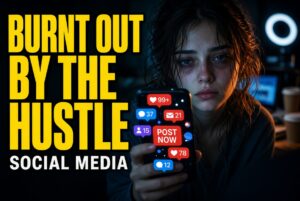
In my video, “The Hustle Is KILLING US! Why Life Felt Better Before Social Media”, I talk about something many of us feel but do not always say out loud: we are tired of performing our lives for the internet.
We do not necessarily need a better feed. Sometimes we need our real lives back.
What Is Social Media Burnout?
Social media burnout is the mental and emotional exhaustion that can come from constant scrolling, comparison, notifications, content creation, and pressure to stay visible online.
It may feel like irritation, distraction, low motivation, anxiety about falling behind, or the urge to keep checking your phone even when you are no longer enjoying it.
The internet did not invent pressure, of course. But it gave pressure a 24-hour notification system.
The Attention Reset
Notice the noise. Step away on purpose. Return to what makes your real life feel meaningful.
The World Health Organization notes that spending too much time following news on television and social media can increase stress.
The CDC also recommends taking breaks from news and social media as one healthy way to cope with stress.
Why Life Can Feel Harder in the Always-Online World
1. Every Moment Starts Feeling Like Content
There was a time when you could sit at the park, enjoy your meal, or wear a cute outfit without turning it into a production.
Now, a peaceful moment can quickly become a photo shoot: check the lighting, fix the angle, write a caption, post it, and then check whether people liked it.
That is work—even when nobody is paying you.
2. Comparison Follows You Everywhere
Social media gives us a front-row seat to everybody’s victories while hiding most of their ordinary days, failures, bills, arguments, and doubts.
We compare our full lives to somebody else’s edited highlights and wonder why we feel behind.
But you may not be behind at all. You may simply be running a race you never agreed to enter.
3. Rest Begins to Feel Like Failure
Hustle culture tells us that every hobby should become a business, every thought should become a post, and every quiet season should be used to “level up.”
Baby, sometimes you need to sit down. Not strategize while sitting down. Not film yourself sitting down. Just sit down.
Rest is not proof that you lack ambition. Rest helps you remember why you were working in the first place.
4. Your Attention Is Constantly Being Pulled
Many platforms make money when we remain engaged. That means our attention is valuable.
If your phone is buzzing, flashing, and recommending something new all day, it becomes harder to give your full attention to one task—or one person.
As I said in the video, our attention is being farmed like a crop. It may be time to put up a fence.
Seven Ways to Reclaim Your Peace Without Disappearing Forever
1. Create Phone-Free Parts of Your Day
Start small. Give yourself the first 30 minutes after waking up and the last 30 minutes before bed without social media.
You do not have to begin the morning by inviting the entire internet into your head.
2. Turn Off Unnecessary Notifications
Not every alert deserves immediate access to you. Keep notifications you truly need, such as calls from family or important business messages, and silence the rest.
An app can wait. Your nervous system should not have to remain on call for strangers.
3. Do Something You Never Post
Cook a meal, take a walk, visit a friend, sing, paint, pray, garden, or watch the sunset without documenting it.
Let the experience be enough by itself. A moment still happened even if nobody online saw it.
4. Stop Following Accounts That Make You Feel Worse
Your feed should not be a daily delivery service for insecurity.
Unfollow, mute, or limit accounts that leave you feeling inadequate, angry, fearful, or pressured. Protecting your peace is not rude.
5. Give Social Media a Job
Before opening an app, decide why you are going there. Are you posting a video? Responding to comments? Researching a topic?
Set a time limit, complete the task, and leave. Do not let a five-minute business task become a two-hour sightseeing tour through everybody else’s life.
6. Build an Online Business You Actually Control
If you use social media for business, do not build your entire business on a platform you do not own.
Use social platforms to reach people, but guide them toward your website and email list.
A website gives your content a permanent home. If you want help getting started, read my guide on how to start affiliate marketing with a website, or visit my free guide page.
Build a Business—Not Another Exhausting Performance
If you want training and tools to help you build your own website, you can explore Wealthy Affiliate. Start with the free option and decide for yourself whether it fits your goals.
7. Decide What “Enough” Means Before You Log In
Algorithms do not have a finish line. There will always be another post to create, trend to chase, or number to improve.
You have to decide what enough looks like for you.
Maybe enough is publishing one helpful video this week. Maybe it is responding to ten comments and then closing the app.
Maybe it is earning a reasonable income without turning every private moment into content.
You Do Not Owe the Internet Your Whole Life
You have the right to be quiet. You have the right to be unavailable. You have the right to be “boring” by digital standards if it means being happy by human standards.
“The more I disconnected from the likes, the more I actually liked my life.”
You do not have to delete every account or move to a cabin in the woods. You can use technology without allowing it to use every part of you.
You can build a business and still have boundaries. You can show up online without placing your peace up for public debate.
The quiet life you miss may still be there—under the notifications. You just have to be brave enough to turn the volume down.
Frequently Asked Questions
What Are Common Signs of Social Media Burnout?
Common signs can include feeling drained after scrolling, checking apps automatically, comparing yourself with others, losing focus, becoming irritated by notifications, or feeling pressured to keep posting even when you need a break.
Do I Have to Quit Social Media Completely?
No. Many people benefit from changing how and when they use it. Turning off notifications, setting time boundaries, curating your feed, and creating phone-free periods may make social media feel more manageable.
How Can Content Creators Avoid Burnout?
Create a realistic posting schedule, batch content when possible, reuse ideas across platforms, track business results instead of vanity numbers, and keep parts of your personal life offline.
If social media is seriously affecting your daily functioning or wellbeing, consider talking with a qualified mental-health professional.
Note: This article is for general educational purposes and is not medical advice.