|
Getting your Trinity Audio player ready...
|
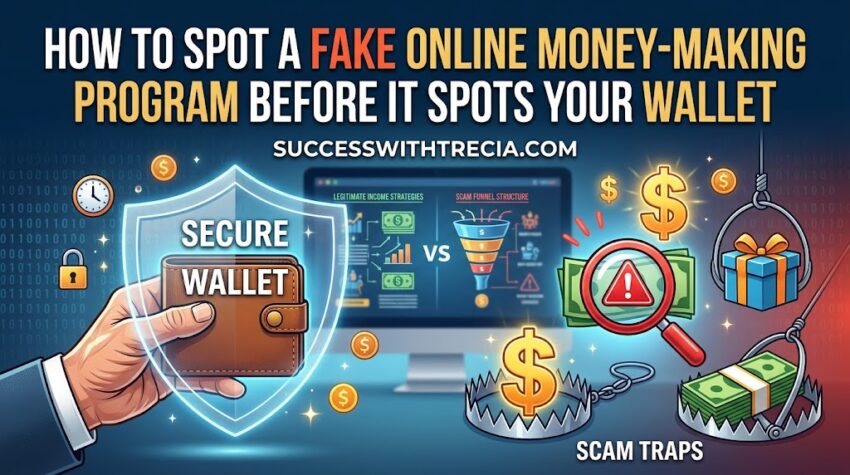
How To Spot A Fake Online Money-Making Program Before It Spots Your Wallet
Look, honey… let’s keep it 100% real for a minute. If you’ve spent more than five minutes scrolling through YouTube, Facebook, or Instagram, you’ve seen them.
Some 22-year-old standing in front of a rented Lamborghini in Miami, waving a stack of cash, telling you that if you just buy his $997 course or join his “automated AI system,” you can make $10,000 a week while sleeping on a beach in Bali.
If that sounds too good to be true, your gut is telling you the exact truth! Every single day, thousands of hard-working people—especially adults over 40 looking to build extra security or escape the 9-to-5 grind—get lured into flashy online programs that end up draining their savings instead of building their bank accounts.
I’ve been in the online space for a long time, and on this blog, I don’t pull punches. Whether I’m doing an honest breakdown in my Sellvia review or pulling back the curtain on high-ticket courses in my David Omari Faceless YouTube Mastery review, my goal is always the same: to protect your hard-earned money and help you build real, long-term digital assets.
Today, I’m giving you the exact red flags to look for so you can spot a fake online money-making program before it gets anywhere near your wallet!

5 Massive Red Flags of Fake Online Programs
1. The “Push-Button” or “Done-For-You” Guarantee
If a program tells you that you can earn thousands of dollars without putting in any effort, learning a skill, or building anything of real value—run! Real online businesses take work, time, and setup. Tools can streamline your work, but there is no magic button that generates money out of thin air.
2. Fake Urgency and Countdown Timers
Ever land on a sales page with a big red timer ticking down from 15 minutes, saying “Only 2 spots left!”? If you refresh the page or open it in a new window an hour later, that timer resets to 15 minutes. High-pressure sales tactics are designed to panic you into buying before your common sense kicks in.
3. Hidden Fees and Mandatory Upsells
A classic scam tactic is advertising a program for “$7” or “$27,” making it sound like a steal. But the moment you put in your credit card, you are thrown into a funnel with mandatory $297 or $997 “upsells” just to get the actual tools you need to make the first part work.
Red Flag Checklist:
- No clear explanation of what the product actually is or how it works.
- Endless screenshots of bank accounts without showing the actual work involved.
- No refund policy, or a “conditional” refund policy requiring impossible tasks.
- Fake testimonials with stock photos or actors hired from freelancing sites.
4. Focusing on Riches Instead of Skills
Legitimate programs teach you transferable skills: how to set up a website, how keyword research works, how to write helpful content, or how to generate traffic. Fake programs only focus on the lifestyle—luxuries, watches, and cars—without ever explaining the actual business model.

How Real “Quiet Money” Is Actually Made
So if the push-button programs are fake, how do real people build dependable online income streams without the hype?
It comes down to what I call Quiet Money. Quiet Money isn’t about bragging on social media or showing off. It’s about building simple, solid digital assets that answer real questions and solve real problems for everyday people.
Instead of chasing shiny objects or burning yourself out—which is why the social media hustle is making us exhausted—real creators focus on strategies like:
- Blogging & Niche Sites: Learning how to start affiliate marketing with a website where you recommend products that actually help people.
- Digital Products: Creating helpful guides or resources so you can stop trading time for money.
- Faceless Video Content: Using tools to create helpful videos on YouTube or TikTok without ever putting your face on camera.
What To Do Before You Ever Buy a Program
- Search for Unbiased Reviews: Search Google or YouTube for “[Program Name] Review” or “[Program Name] Scam.” Look for real blogs and channels that break down the pros and cons instead of just trying to sell you.
- Check for Free Trials: Honest companies let you look inside or test the platform before demanding your credit card.
- Ask Yourself: “What Am I Actually Learning?” If you can’t state in one sentence what skill you will acquire, keep your wallet in your pocket.
Want to Learn the Real Way to Build an Online Business?
Skip the hype, fake timers, and scam courses. Test-drive a complete, step-by-step training platform and website hub 100% free with no credit card required.
Claim Your Free Step-By-Step Training & Hub AccessIncludes direct coaching, community support, and core video training.