
|
Getting your Trinity Audio player ready...
|
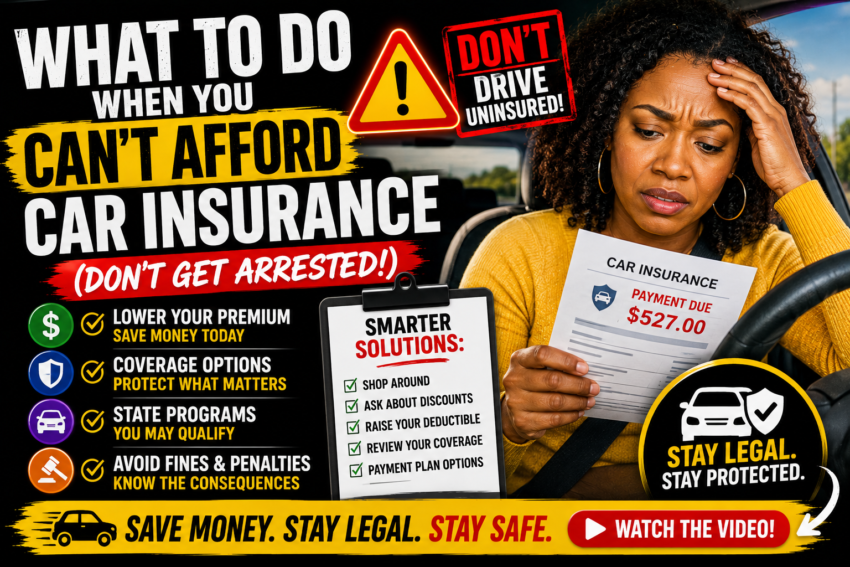
What to Do When You Can’t Afford Car Insurance 🚗💨 (Don’t Get Arrested!)
Car insurance getting too expensive? Before you cancel your policy and keep driving, here are smarter ways to lower your bill, protect yourself, and avoid turning a money problem into a legal problem.
▶ Watch the Video 💰 Ways to Lower Your Bill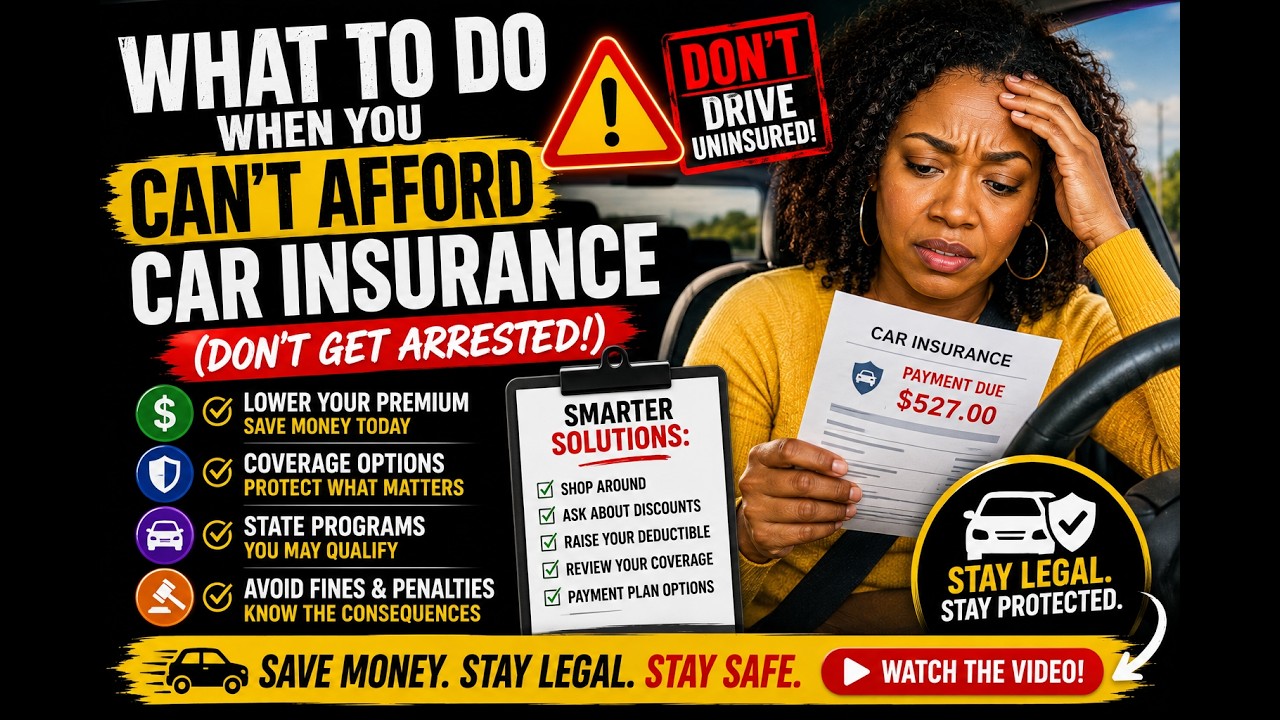
Let’s talk about something a LOT of people are dealing with right now.
Your car insurance bill comes in…
You look at the amount…
And you’re thinking:
“They want HOW MUCH?! For CAR INSURANCE?!” 😩
When you’re already trying to pay rent, groceries, utilities, a car payment and everything else, insurance can feel like one more bill you simply cannot afford.
So you might be tempted to say:
“I’m just going to let it cancel.”
PLEASE DON’T DO THAT AND KEEP DRIVING.
Driving uninsured can create a much bigger financial and legal problem, and the exact penalties depend on the state where you live.
🎥 Watch: What to Do When You Can’t Afford Car Insurance
Watch my full video below, then keep reading because I’m giving you several things to try BEFORE simply letting your insurance lapse.
First: Don’t Just Cancel Your Insurance and Keep Driving
I understand why someone would consider it.
If the choice feels like:
🥫 Buy groceries…
💡 Pay the electric bill…
🏠 Pay rent…
🚗 Or pay car insurance…
Something has to give.
But simply dropping your insurance and continuing to drive can expose you to tickets, fines, license or registration consequences, and potentially enormous out-of-pocket costs if you cause an accident.
An Expensive Insurance Bill Is Bad.
An expensive insurance bill PLUS legal trouble PLUS an uninsured accident can be much worse.
So What Can You Do If You Really Can’t Afford It?
Before giving up on coverage, start looking for ways to make the policy cheaper.
1. SHOP AROUND — Seriously.
One of the biggest mistakes people make is assuming every insurance company will charge them about the same amount.
They won’t.
Insurance companies use different rating formulas, so one company could quote you significantly more—or less—than another for similar coverage.
Get several quotes.
Not one.
Not two.
SHOP.
💡 Quote Shopping Tip
When comparing prices, make sure you’re comparing similar:
✔ Liability limits
✔ Comprehensive coverage
✔ Collision coverage
✔ Deductibles
✔ Uninsured/underinsured motorist coverage where applicable
✔ Optional benefits
2. Ask About EVERY Discount
Don’t assume the insurance company automatically applied every discount you qualify for.
Ask.
Combining auto with renters, homeowners or another policy may qualify for savings.
A good driving record may help qualify you for lower rates.
Some insurers offer discounts for approved defensive-driving or driver-training courses.
Some companies offer usage-based programs that monitor driving habits in exchange for possible discounts.
Driving fewer miles may matter with some insurers.
Ask whether autopay, paperless billing or paying differently changes the premium.
3. Consider a Higher Deductible
Your deductible is the amount you’re responsible for paying before certain insurance coverage pays after a covered loss.
Generally, choosing a higher deductible can lower your premium.
⚠️ But Don’t Go Too Far
Don’t choose a $2,000 deductible just to save money today if there’s absolutely no way you could come up with $2,000 after an accident.
Lower premium doesn’t automatically mean better coverage for your situation.
4. Review All the Extras on Your Policy
Pull out your declarations page and look at what you’re actually paying for.
You may have optional coverages such as:
- Rental reimbursement
- Roadside assistance
- Higher-than-needed optional limits
- Other endorsements or extras
Don’t blindly remove coverage.
Instead, ask your insurance professional:
“What can I change that would lower my premium, and what protection would I be giving up?”
That second part is important.
5. If the Car Is Paid Off, Review Comprehensive & Collision
If you own an older vehicle outright, it may be worth reviewing whether carrying comprehensive and collision coverage still makes financial sense.
But don’t automatically remove them just because the vehicle is paid off.
Ask yourself:
❓ What is my car currently worth?
❓ What are my comprehensive and collision premiums?
❓ What are my deductibles?
❓ Could I afford to replace this vehicle myself?
❓ What would happen financially if the car were totaled tomorrow?
6. FINANCED CAR? Be Very Careful Dropping Coverage.
This is completely different.
If you have a car loan, your lender will generally require insurance protecting the vehicle itself.
If your required coverage lapses, your loan agreement may allow the lender to purchase what’s called force-placed insurance.
🚨 Force-Placed Insurance Can Be Expensive
The lender obtains coverage because you failed to maintain the insurance required by your loan.
But here’s the kicker:
YOU may be charged for it.
And it primarily protects the lender’s interest in the vehicle—not necessarily you the way your own auto policy would.
So letting your insurance lapse on a financed vehicle can make your financial situation even worse.
7. Call the Insurance Company BEFORE the Policy Cancels
Don’t wait until everything has already fallen apart.
Call.
Tell them:
“My premium has become unaffordable. What options do I have to reduce it without losing the coverage I legally need?”
Ask about:
- Changing deductibles
- Available discounts
- Removing optional benefits
- Payment-plan options
- Re-rating based on changed driving habits
- Usage-based insurance
- Lower-mileage options
8. Don’t Let Your Policy Lapse While You’re Shopping
This is another mistake that can cost you.
If possible, shop for replacement insurance BEFORE canceling the existing policy.
Avoid a Gap in Coverage
Make sure you know exactly when the new coverage begins before ending the old policy.
9. If You Truly Can’t Afford Insurance, Stop Driving the Car
I know that’s not the answer anybody wants to hear.
But if you genuinely cannot afford the minimum insurance required where you live, the solution is NOT to pretend you have insurance and hope you don’t get caught.
Temporarily consider alternatives such as:
- Public transportation
- Carpooling
- Rides from family
- Walking or biking where practical
- Working from home when possible
- Other transportation arrangements
One uninsured accident could cost far more than months—or years—of insurance premiums.
10. Check Your State’s Insurance Department
Insurance laws aren’t identical across the United States.
Your state’s Department of Insurance or insurance regulator can help you understand:
✔ Minimum required coverage
✔ Consumer rights
✔ Licensed insurance companies
✔ Insurance complaints
✔ Available consumer programs
✔ State-specific insurance information
This is especially important before changing coverage based on advice you saw online.
🚗 Your “I Can’t Afford My Insurance” Action Plan
STEP 1: Don’t cancel the policy yet.
STEP 2: Call your insurer and ask about every available discount.
STEP 3: Ask what changing your deductible would save.
STEP 4: Review optional coverage and extras.
STEP 5: Get multiple competing quotes.
STEP 6: Check your state’s minimum insurance requirements.
STEP 7: Start the replacement policy BEFORE ending the old one.
STEP 8: If you cannot obtain required coverage, don’t drive uninsured.
Don’t Confuse “Minimum Coverage” With “Enough Coverage”
This is important.
You might be able to lower your bill by purchasing only your state’s required minimum coverage.
But the minimum legal requirement is not automatically enough to protect your finances after a serious accident.
If damages exceed your insurance limits, you could potentially be responsible for additional costs.
CHEAPEST doesn’t always mean BEST.
The goal is to find the most affordable coverage that still provides protection appropriate for your situation.
🔎 Have a Financed Vehicle?
The Consumer Financial Protection Bureau has information explaining auto insurance requirements when financing a vehicle and what can happen if required insurance lapses.
Read the CFPB Auto Insurance Guide →💰 More Money-Saving & Business Tips
I cover money, online business, AI tools, side hustles and real-world ways to make smarter financial decisions here on Success With Trecia.
Explore Success With Trecia →Frequently Asked Questions
What should I do if I can’t afford car insurance?
Before canceling your policy, shop with multiple insurers, ask about discounts, review your deductibles and optional coverages, and discuss payment options with your insurer. If you still cannot afford the legally required coverage, avoid driving uninsured.
Can I legally drive without car insurance?
Auto insurance and financial-responsibility laws vary by state. Most states require drivers or vehicle owners to maintain specified financial protection. Check your state’s DMV and insurance regulator for the exact rules that apply to you.
Can I lower my car insurance deductible to save money?
Usually it’s the opposite: choosing a higher deductible may reduce the premium for comprehensive or collision coverage. However, you’ll be responsible for more of the cost if you have a covered claim.
Can I drop full coverage on a financed car?
Your financing contract will generally require coverage that protects the vehicle. If required coverage lapses, the lender may obtain force-placed coverage and charge you for it. Check your loan agreement before changing your policy.
Does raising my deductible lower my car insurance?
A higher comprehensive or collision deductible can often reduce your premium, but make sure the deductible is an amount you could realistically afford after a loss.
Should I cancel my old insurance before buying cheaper insurance?
It’s generally safer to have the replacement coverage confirmed and effective before canceling your existing policy so you don’t accidentally create a gap in coverage.
Final Thoughts
Listen, I understand.
Everything is expensive.
Groceries are expensive.
Cars are expensive.
Housing is expensive.
And then your insurance company sends you another bill.
But don’t turn:
“I can’t afford my insurance.”
into:
“I got caught driving uninsured AND now I owe even more money.”
Make some calls.
Get quotes.
Ask about discounts.
Review the policy.
Adjust what makes sense.
And if necessary, temporarily stop driving until you can get properly insured.
The goal isn’t just cheap insurance. It’s keeping one financial problem from becoming five.
Before You Let That Policy Cancel…
Watch my full video and learn what options you can explore before making a decision that could cost you even more.
▶ WATCH THE FULL VIDEO