

|
Getting your Trinity Audio player ready...
|
Everybody talks about how easy it is to start dropshipping. But hardly anybody talks about what happens AFTER somebody places an order.
You’ve probably seen those videos.
“Start an online store with no inventory!”
“Let somebody else ship the products!”
“Make money while you sleep!”
And technically, dropshipping does allow you to sell products without keeping your own inventory.
But here’s what beginners need to understand:
Not handling the inventory doesn’t mean you’re not responsible for the business.
Because when a customer has a problem, guess who they’re coming to?
YOU!

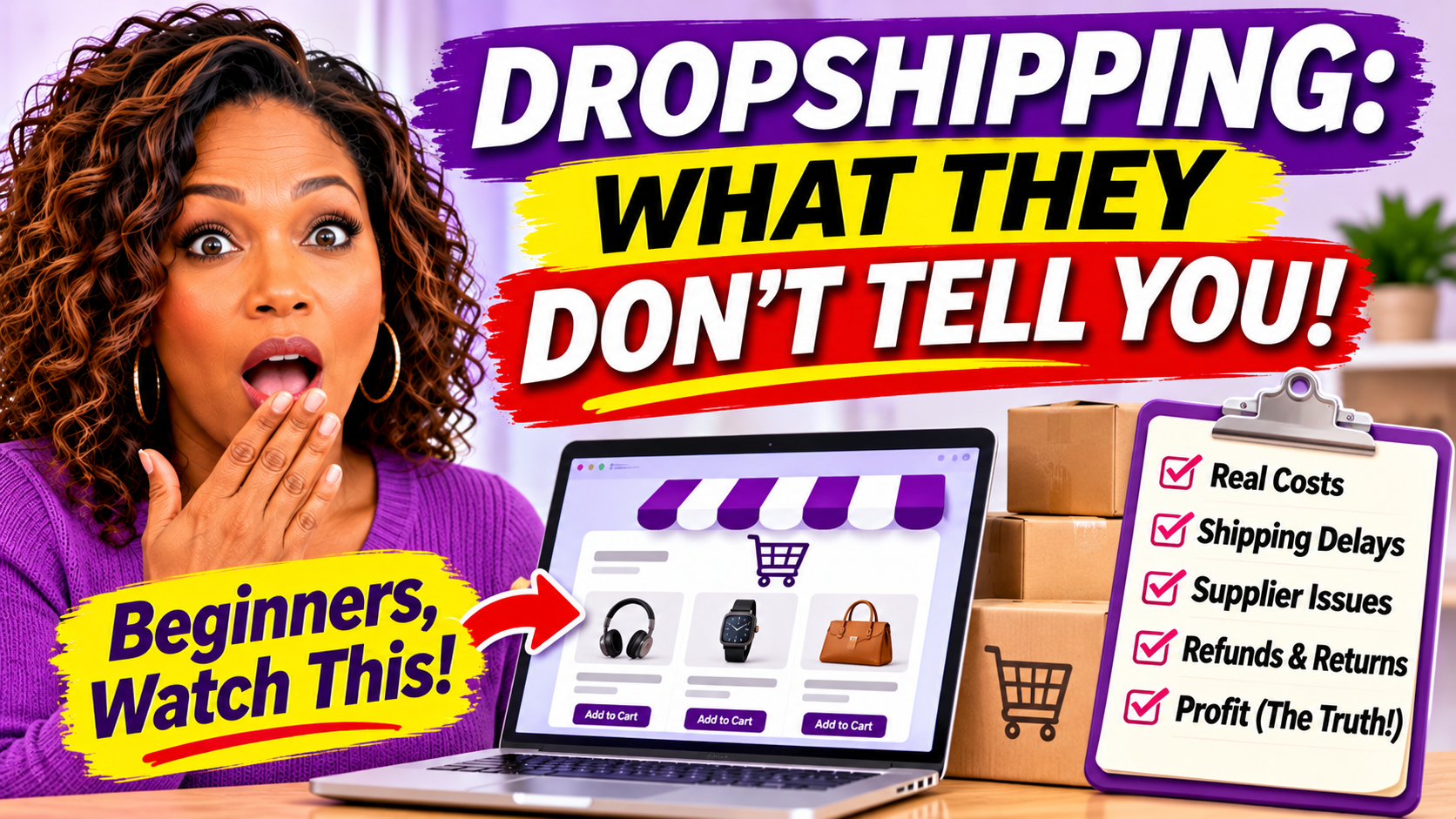
Watch: Nobody Tells Beginners THIS About Dropshipping
Watch the video below, then keep reading for nine important lessons to consider before investing in a dropshipping store.
First, What Exactly Is Dropshipping?
Dropshipping is an ecommerce fulfillment method where a third-party supplier stores and ships products on behalf of an online retailer.
Here’s how it generally works:
- You list a supplier’s product in your online store.
- A customer purchases that product from your business.
- You send the order information to your supplier and pay the supplier.
- The supplier packages and ships the product to your customer.
- You handle the customer relationship, including questions and problems.
The difference between what the customer pays and what you spend is not automatically your profit.
You still have operating expenses.
1. Your Profit Is NOT the Difference Between Two Price Tags
Let’s say you find a product that costs $12 from a supplier.
You list it in your store for $35.
At first glance, that looks like $23 in profit.
But let’s break down what could happen.
| Example expense | Amount |
|---|---|
| Customer pays | $35.00 |
| Supplier product cost | −$12.00 |
| Supplier shipping | −$5.00 |
| Payment processing | −$1.32 |
| Advertising cost per sale | −$10.00 |
| Allocated operating expenses | −$2.00 |
| Estimated remaining profit | $4.68 |
Illustrative example only. Actual supplier costs, fees, advertising expenses, taxes, refunds, and profit vary.
See what happened?
You started with what looked like $23 and ended up with less than $5.
And that’s before accounting for any unexpected refund, chargeback, or additional expense.
Lesson: Calculate the full cost of every order before deciding whether a product is worth selling.
2. You’re Still Responsible When the Supplier Messes Up
This is one of the biggest surprises for beginners.
Your supplier might ship the wrong item.
They might send a damaged product.
They might run out of inventory without notifying you.
But your customer didn’t buy the product from your supplier.
They bought it from your store.
That means you’re usually the person handling complaints, refunds, replacements, and updates.
Before working with a supplier, investigate their product quality, communication, shipping process, and return procedures.
3. Shipping Times Can Make or Break Your Store
Imagine ordering something online and expecting it next week.
Two weeks pass.
Nothing arrives.
Now you’re checking the tracking number every five minutes.
That’s the experience you don’t want your customers having.
Some overseas suppliers have longer delivery times, and international orders may encounter customs delays.
You need to provide accurate shipping information and avoid making delivery promises you cannot support.
For US online sellers, the FTC’s Mail, Internet, or Telephone Order Merchandise Rule generally requires a reasonable basis for advertised shipment times. If no shipping time is stated, the default is generally 30 days. Delays can trigger notice, consent, cancellation, and refund obligations.
Learn more from the Federal Trade Commission’s online shipping guidance.

4. Getting Visitors Is Often Harder Than Building the Store
You can create a beautiful website.
You can upload 50 products.
You can even create a fancy logo.
But none of that guarantees customers.
People have to discover your store, trust it, and decide to purchase.
That usually means learning at least one marketing method:
- Search engine optimization (SEO)
- Helpful social media content
- Product demonstrations
- Email marketing
- Paid advertising, when your budget allows
My suggestion for beginners is to learn how customer acquisition works before spending heavily on advertising.
Otherwise, you could spend more attracting customers than you earn from their purchases.
5. Selling a Trending Product Doesn’t Guarantee Sales
Here’s another trap.
Somebody on social media says a particular product is making thousands of dollars.
Suddenly, everybody starts selling the same thing.
Now there are dozens of stores offering similar products, sometimes using identical photos and descriptions.
That’s not much of a competitive advantage.
Instead, investigate whether the product solves a genuine problem for a clearly defined audience.
Research competitors, customer concerns, quality, shipping, and potential margins.
A product being popular doesn’t automatically mean it’s profitable for your business.
6. Refunds and Chargebacks Can Wipe Out Your Earnings
Let’s say you finally start making sales.
Then a customer receives a damaged product and requests a refund.
Another customer says their package never arrived.
Someone else disputes a charge with their credit card company.
Depending on your payment provider, supplier agreement, and the circumstances, you could face lost revenue, fees, or other costs.
You need clear refund policies, reliable order records, and a process for resolving problems.
And remember: your store’s policies must comply with applicable consumer protection laws.
7. You Might Need Money Before Your Customer’s Payment Is Available
This is a cash-flow issue beginners sometimes overlook.
When a customer orders, your supplier may require payment before shipping.
But your payment processor may not transfer the customer’s money to your bank immediately.
That means you might need enough available funds to pay the supplier while waiting for your payout.
Refunds, payment holds, and sudden order increases can make this more complicated.
8. Dropshipping Is Not Completely Passive
I know. That’s not what the advertisements make it sound like!
Yes, software can automate parts of order processing and inventory updates.
But somebody still needs to monitor orders, respond to customers, review suppliers, manage marketing, and handle financial decisions.
Automation can reduce repetitive work.
It doesn’t eliminate your responsibility as the business owner.
9. You Need to Understand Taxes, Product Rules, and Legal Responsibilities
Running a dropshipping store means operating a retail business.
Depending on where you operate and where you sell, you may need to address business registration, sales tax, consumer protection requirements, and product safety rules.
International suppliers can introduce customs duties and import-related complications.
You should also avoid counterfeit products, misleading product claims, and listings that violate intellectual property rights.
If you’re unsure about your obligations, consult a qualified tax or legal professional familiar with ecommerce.
Is Dropshipping Still Worth Starting in 2026?
It can be, but it’s not the right business model for everybody.
Potential Advantages
- No need to warehouse inventory
- Ability to test product categories
- Flexible online operations
- Access to different supplier networks
Potential Disadvantages
- Competition and pricing pressure
- Supplier dependence
- Customer service responsibilities
- Marketing and operating costs
- Shipping and refund complications
The question isn’t whether dropshipping works for someone on YouTube.
It’s whether you can build a reliable, profitable store with your available time, money, skills, and resources.
What I’d Do Before Starting a Dropshipping Store
If I were starting from scratch, here’s the order I’d follow.
- Choose a niche. Focus on a specific audience rather than selling random trending products.
- Research demand. Find out what customers want and what competitors already offer.
- Investigate suppliers. Check product quality, shipping times, and return policies.
- Order a sample. Whenever feasible, inspect the product before promoting it.
- Calculate actual margins. Include supplier costs, shipping, fees, marketing, and expected returns.
- Learn marketing fundamentals. Understand how you’ll attract customers.
- Start small. Test a limited product selection rather than paying for a huge catalog.
- Track results. Monitor profit, customer satisfaction, delivery problems, and refund rates.

What If You Don’t Have Much Money to Start?
If your budget is extremely limited, I’d be cautious about jumping straight into a dropshipping store that depends on paid advertising.
Instead, you might consider learning website creation, SEO, content marketing, or offering a small digital service.
These skills can help you understand how online businesses attract customers, even if you eventually decide to pursue ecommerce.
You can also explore affiliate marketing for beginners as a different business model.
Affiliate marketing generally doesn’t require you to fulfill customer orders, although you still need to build an audience, create helpful content, and comply with affiliate program rules.
Neither model guarantees earnings.
Want to Learn Website Building and Digital Marketing?
Before investing heavily in any online business, learning the fundamentals can help you make more informed decisions.
Wealthy Affiliate is one training platform you can explore for website-building, content creation, and affiliate marketing education.
Learn the Skills Behind an Online Business
Explore website-building and digital marketing training before deciding which business model fits your goals.
Explore Wealthy AffiliateAffiliate link. Training and tools do not guarantee income. Review current membership options before purchasing.
Frequently Asked Questions About Dropshipping
Can beginners start dropshipping with no money?
You may be able to research products and learn ecommerce skills for free. Operating a functioning store, however, can involve website fees, supplier payments, product samples, marketing, and other expenses. Starting with literally no available funds can create cash-flow problems.
Is dropshipping legal?
Yes, dropshipping is a legitimate fulfillment method. Sellers must still comply with applicable tax laws, consumer protection requirements, product regulations, and marketplace policies.
How much profit can beginners make dropshipping?
There is no guaranteed amount. Profit depends on product costs, marketing, shipping, fees, refunds, and sales volume. Some stores lose money, while others become profitable. Revenue screenshots alone do not establish actual profit.
Is dropshipping better than affiliate marketing?
Neither is automatically better. Dropshipping gives you a retail storefront and pricing control but brings fulfillment-related customer responsibilities. Affiliate marketing generally involves referring customers to merchants for qualifying commissions, without operating the merchant’s fulfillment process.
What’s the biggest mistake dropshipping beginners make?
One major mistake is launching a store without understanding product demand, full costs, customer acquisition, or supplier reliability. A store can generate sales and still lose money.
Final Thoughts: Dropshipping Is a Business, Not a Shortcut
Dropshipping isn’t necessarily a scam.
And it isn’t automatically a bad way to start an online store.
But the idea that you can upload a few products, sit back, and watch money roll in leaves out most of the work involved.
You need customers.
You need dependable suppliers.
You need enough margin to cover expenses.
And you need a plan for when something goes wrong.
My advice? Learn the business before buying the dream.
Because the goal isn’t just to make sales.
The goal is to build something that actually makes financial sense.
Have you ever tried dropshipping? What was your biggest surprise?
Share your experience in the comments.
Affiliate Disclosure: This article contains affiliate links. I may receive a commission from qualifying purchases at no additional cost to you.
Editorial Note: This article provides general educational information, not individualized legal, tax, or financial advice. The profit example is hypothetical. This is an original companion article to the embedded video, not a verified transcript of it.