
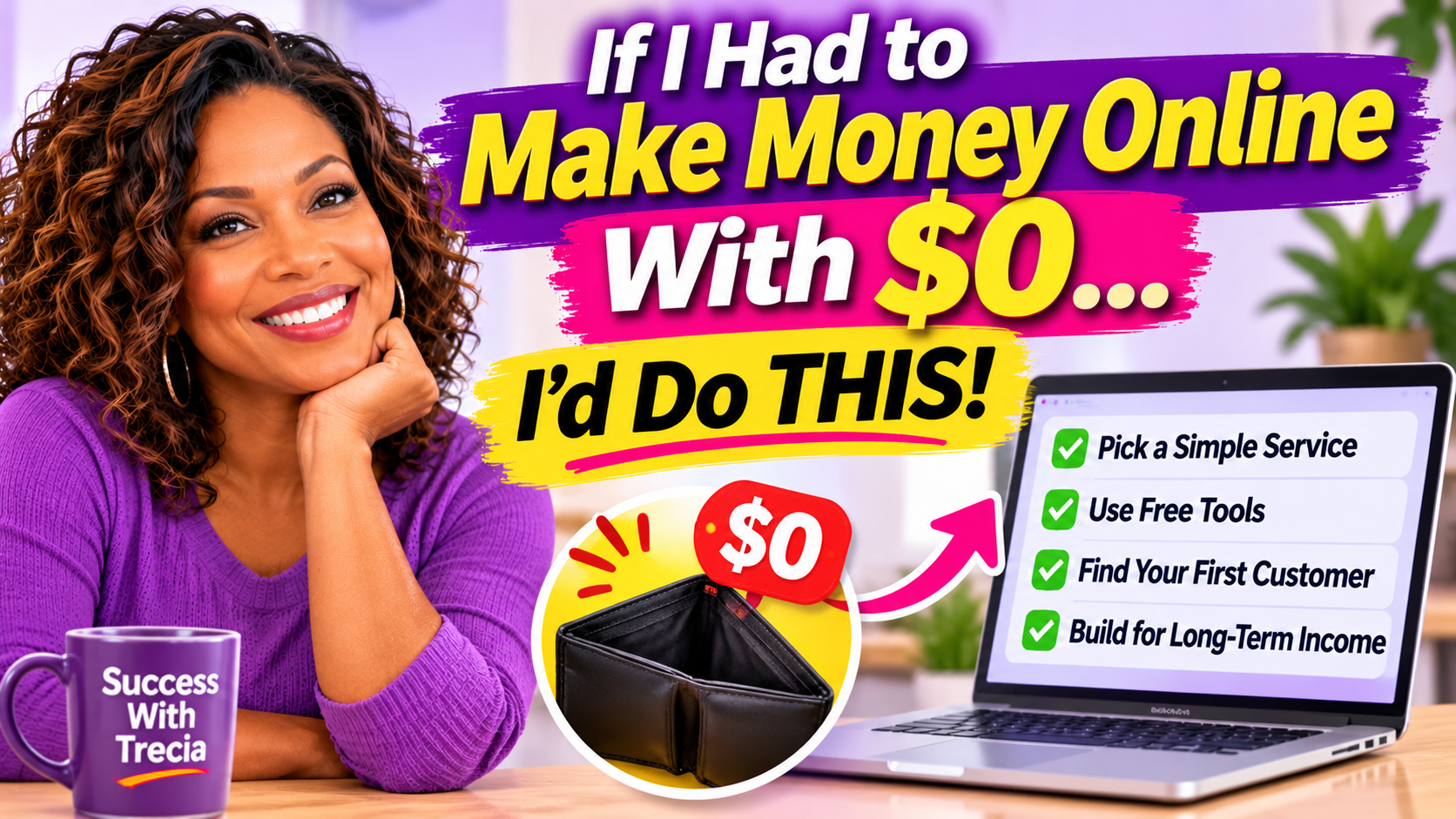
If I woke up tomorrow with $0 to invest in an online business, I wouldn’t start by buying a course, paying for ads, or chasing the latest AI money-making trend.
I’d start with something much simpler: finding a problem I could solve for somebody who was willing to pay for the solution.
Because here’s something people don’t talk about enough.
You don’t always need money to start offering a service online. But you do need something valuable to offer.
And if I had to start all over again, here’s exactly how I would approach it.

Watch the Video: If I Had to Make Money Online With $0
Watch the video below, then use this guide to turn the idea of starting with nothing into a practical action plan.
Step 1: Stop Looking for the Perfect Side Hustle
One of the biggest mistakes beginners make is spending weeks researching different ways to make money online without ever trying one.
Monday, they’re thinking about dropshipping.
Tuesday, it’s affiliate marketing.
Wednesday, somebody on YouTube tells them AI-generated ebooks are the answer.
By Friday, they’re confused, overwhelmed, and still haven’t started.
Sound familiar?
If I were starting with no money, I’d narrow my focus to one simple question:
What can I help somebody accomplish using skills and tools I already have?
That question would become the foundation of my first online offer.
Step 2: Pick One Simple Service to Offer
Instead of trying to build a complicated business immediately, I’d start with a small service I could learn and deliver using free tools.
Social Media Content
Help a local business create captions, organize content ideas, or prepare a weekly posting calendar.
Basic Website Updates
Assist website owners with formatting articles, updating pages, or fixing simple content issues after learning the platform.
Short Video Editing
Turn a client’s existing footage into shorter clips using free editing software, with permission.
Virtual Assistance
Offer scheduling, spreadsheet organization, research, or inbox support while protecting client information.
Here’s the important part: I wouldn’t offer all four services at once.
I’d choose one service for one type of customer.
For example: “I help hairstylists create a week’s worth of social media captions.”
That’s much clearer than saying, “I can do anything online.”
Step 3: Learn the Basics Without Buying a Course
Before charging somebody, I would make sure I understood how to deliver the service.
Free tutorials, official product documentation, and practice projects can help you develop the basics.
Depending on the service, useful tools might include:
- Google Docs: Writing, editing, and sharing documents.
- Google Sheets: Organizing information and simple spreadsheets.
- Canva: Creating basic designs using available free features.
- CapCut: Editing videos with available free tools.
- Google Meet: Speaking with prospective clients.
Free plans have limitations, and features can change. Check the current terms and commercial-use rules before using a tool for client work.

Step 4: Create a Sample Before You Look for Customers
If I had no customers, no testimonials, and no portfolio, I’d create a sample project.
Let’s say I chose social media content for beauty salons.
I could create a sample seven-day content calendar for an imaginary salon.
It might include:
- Three educational posts about hair care
- Two appointment reminder posts
- One promotional post
- One customer engagement question
I’d put the sample in a shareable document or simple portfolio.
Then I’d show potential customers what I could actually deliver.
Important: Label sample work honestly. Don’t present fictional projects as paid client results.
Step 5: Find Your First Potential Customer for Free
This is where I would spend most of my effort.
Because creating a service is one thing. Finding someone willing to buy it is another.
I’d start with businesses I understand and people who might genuinely benefit from my help.
For example, if I were offering content assistance to salons, I might research salons with active social media pages and identify opportunities to improve their content.
Then I’d send a short, personalized message through an appropriate business contact channel.
Hi! I help small businesses organize their social media content. I noticed your salon shares some great hairstyles, and I had a few ideas for educational posts that could complement them. Would you be interested in seeing a sample weekly content plan?
Notice what that message doesn’t do.
It doesn’t promise thousands of followers, guaranteed sales, or overnight success.
It simply offers something relevant.
I’d personalize each message, avoid mass spam, and respect anyone who isn’t interested.
Step 6: Keep the First Offer Small
When you’re just getting started, it’s tempting to offer a huge package because you want to impress somebody.
But I’d keep the first project manageable.
For example:
- Five social media captions
- One week of content ideas
- Formatting one existing blog post
- Editing two short clips from supplied footage
I’d explain exactly what’s included, the delivery deadline, the revision policy, and the price before beginning.
Payment processing and freelance platforms may deduct fees. I’d factor those into my pricing rather than assuming every dollar collected is profit.
Step 7: Use the First Earnings to Build Something Bigger
Here’s where my strategy would change.
Once I had some experience and a little money coming in, I’d start thinking about building an online asset that I control.
That could be a website, a helpful blog, an email list, or a collection of original educational videos.
Why?
Because service work usually requires your time to earn each payment.
Building useful content can create additional opportunities over time, although it may take months or longer to attract meaningful traffic or income.
One option I’d explore is affiliate marketing.
With affiliate marketing, you can earn commissions when someone makes a qualifying purchase through your referral link.
But you still need an audience, relevant content, trust, and a reason for people to choose your recommendation.
For a deeper introduction, visit my Affiliate Marketing for Beginners guide.

My 7-Day Plan for Starting With $0
If I wanted to stop researching and start taking action, here’s the schedule I’d follow.
Day 1: Choose Your Service
Pick one skill you can already perform or learn to a basic, usable level.
Day 2: Choose Your Customer
Decide who you’re helping. Be specific: salons, pet groomers, independent artists, or another defined group.
Day 3: Create a Sample
Prepare one example that demonstrates the service you plan to sell.
Day 4: Build a Simple Portfolio
Use a shareable document or free portfolio option to explain your offer and show your work.
Day 5: Research Potential Customers
Identify businesses or individuals who may genuinely benefit from the service.
Day 6: Start Personalized Outreach
Contact a manageable number of relevant prospects, without sending spam or making exaggerated claims.
Day 7: Review and Improve
Evaluate responses, improve your offer, and plan your next week of outreach.
What I Would NOT Do With My Last $0
There are a few things I’d avoid completely.
- Paying for expensive courses before testing whether people want my service.
- Buying multiple AI subscriptions without a clear business purpose.
- Spending money on advertising before understanding my offer.
- Believing screenshots of someone else’s earnings guarantee my results.
- Creating a complicated website before identifying my audience.
- Trying five different business models at the same time.
I’d rather build one small, useful service than spend months collecting tools I don’t know how to use.
Where Does Wealthy Affiliate Fit Into This?
Once you’re ready to explore building your own website and learning digital marketing, structured training may be helpful.
Wealthy Affiliate is one platform you can investigate for website-building, content creation, and affiliate marketing education.
I wouldn’t suggest purchasing a premium plan when you genuinely have no money to spare.
Start by learning what you can, compare your options, and only consider paid tools when the expense makes sense for your situation.
Want to Learn How Online Businesses Work?
Explore Wealthy Affiliate’s current training options and see whether its website-building and digital marketing resources fit your goals.
Explore Wealthy AffiliateI may earn a commission if you make a qualifying purchase through this link. Training does not guarantee income.
Frequently Asked Questions
Can I really start making money online with no money?
Some service businesses can be started without buying software or advertising if you already have internet access, suitable equipment, and a marketable skill. However, platform fees, taxes, and other costs may still apply.
What’s the fastest way to get started?
Offering a specific service you already know how to deliver may be more direct than building a website and waiting for search traffic. That doesn’t guarantee quick payment or customer demand.
Should I start with affiliate marketing or freelancing?
If you need near-term income and have a useful skill, freelancing may be worth testing first. Affiliate marketing can be a longer-term option, but it usually requires building content, traffic, and trust before commissions become consistent.
Do I need AI tools to make money online?
No. AI tools may help with drafting, organization, and routine tasks, but they are not required. Understanding your customers and delivering quality work matters more.
Final Thoughts: If I Had to Start Over, I’d Keep It Simple
If I had to make money online starting with $0, I wouldn’t try to build a giant business overnight.
I’d choose one skill, identify one type of customer, create one useful offer, and focus on finding my first paying client.
Then I’d improve my service, build my reputation, and gradually explore opportunities that could grow beyond trading my time for individual projects.
The goal isn’t to find a magical website that prints money. It’s to become someone who can provide something valuable.
That’s where I’d start.
What about you? If you were starting from zero today, which online service would you try first?
Share your answer in the comments.
Affiliate Disclosure: This article contains affiliate links. I may earn a commission from qualifying purchases at no additional cost to you.
Editorial Note: This article is an original beginner strategy accompanying the linked video, not a verified transcript or a claim of guaranteed earnings.