

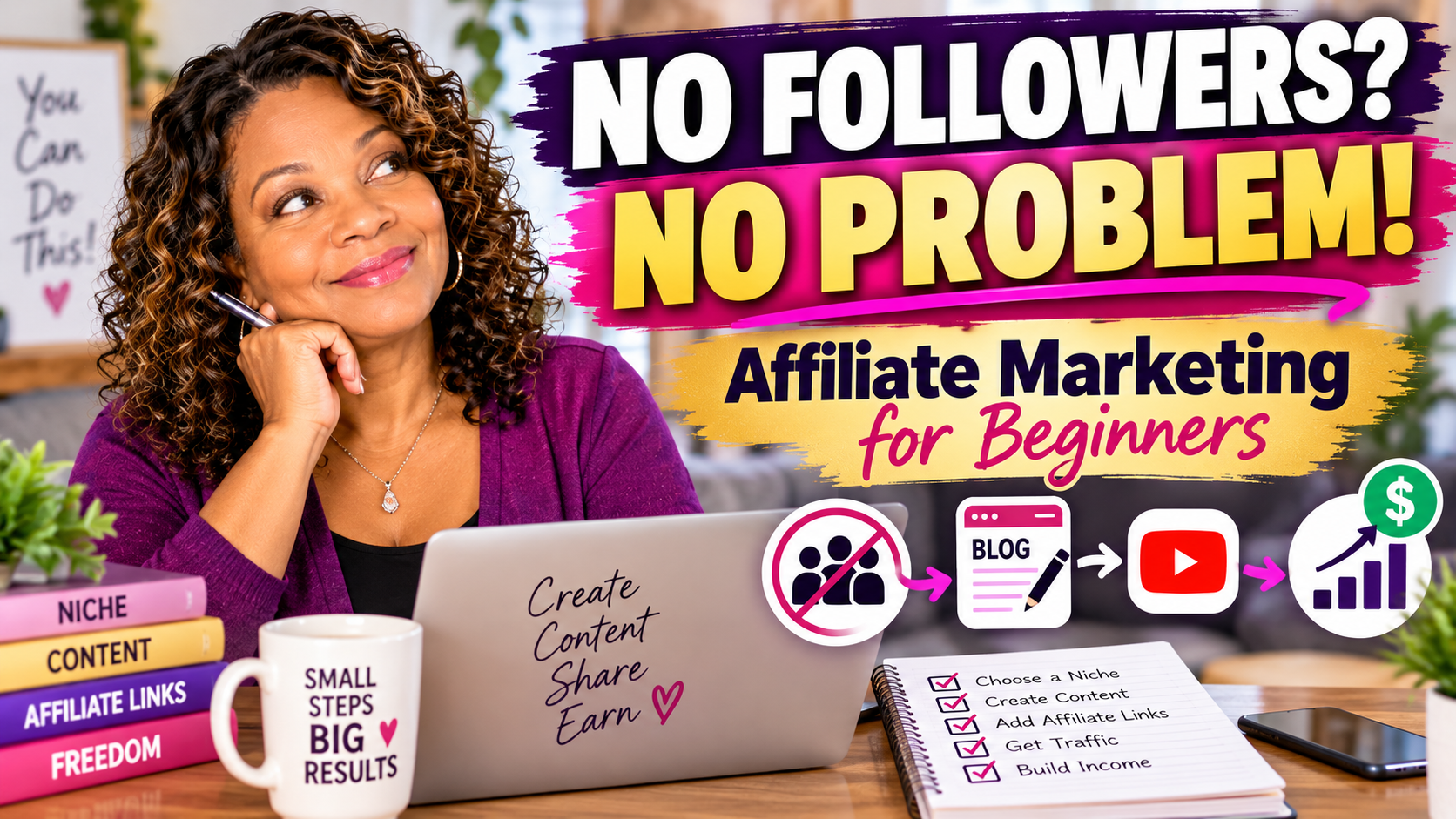
How to Start Affiliate Marketing With No Audience
No followers? No email list? No fancy website? You can still begin. Here’s how to build from zero without chasing followers or wasting money.
Affiliate disclosure: This article may contain affiliate links. If you make a qualifying purchase through my links, I may earn a commission at no additional cost to you. Income is not guaranteed.

Wait, You Mean I Don’t Need Thousands of Followers?
Let me tell you something.
When I first started learning about making money online, it seemed like everybody already had something I didn’t.
Thousands of followers. Big email lists. Fancy websites. Professional cameras.
And here I was wondering how you’re supposed to get started when nobody even knows you exist!
But here’s what beginners need to understand:
The goal isn’t to become famous. It’s to help people who are already searching for answers.
That distinction changes everything.
Watch My YouTube Video
In this video, I introduce the idea of starting affiliate marketing without an existing audience. Keep reading for the step-by-step plan.
What Is Affiliate Marketing?
Affiliate marketing is a business model where you recommend products or services from other companies.
When someone completes a qualifying purchase or action through your special tracking link, you may receive a commission.
For example, imagine you create a tutorial about building a website.
You recommend a website-building service that you believe fits the reader’s needs.
If someone signs up through your affiliate link and meets the program’s requirements, you could earn a commission.
You don’t necessarily have to manufacture products, maintain inventory, or ship packages.
But you do need people to discover and trust your content.
For a complete introduction, read my guide to starting affiliate marketing with a website .
Four Ways to Get Started Without an Audience
Google Search
Create helpful blog posts answering specific questions people are already searching for.
YouTube Search
Make tutorials, demonstrations, comparisons, and honest reviews people can discover through search.
Create useful visual content connected to your blog posts where your niche fits the platform.
Helpful Communities
Answer real questions in relevant communities without spamming affiliate links.
Notice what these methods have in common?
They focus on helping people discover useful information, not begging strangers to follow you.
Step 1: Pick One Specific Niche
Don’t Try to Sell Everything
Your niche is the topic and audience your content serves.
Instead of trying to promote every product on the internet, focus on one group of people with recognizable problems.
Examples:
- Budget-friendly technology for new business owners
- Smart pet products for dog owners
- Beginner website-building tools
- AI productivity tools for small businesses
A focused niche makes it easier to know what content to create and which products make sense.
Step 2: Find Questions People Are Already Asking
This is where beginners can make a big mistake.
They create content about whatever they feel like talking about, without checking whether anyone is looking for it.
Start by searching Google and YouTube for questions related to your niche.
Look at autocomplete suggestions, related questions, and common complaints in product reviews.
For example, someone interested in starting an online business might search:
- How do I start affiliate marketing with no money?
- Do I need a website for affiliate marketing?
- Which website builder is easiest for beginners?
- How do affiliate commissions work?
If you want to learn how to make your content more discoverable, read my beginner’s guide to SEO for affiliate marketing .
Step 3: Choose One Platform and Start Publishing

You don’t need a blog, podcast, YouTube channel, TikTok account, and newsletter all at once.
Pick the format you can realistically maintain.
If You Like Writing
Start a blog with beginner guides, how-to articles, and product comparisons.
If You Like Talking
Start a YouTube channel. Make helpful videos that answer specific questions.
If You Don’t Want to Show Your Face
Consider screen-recorded tutorials, product demonstrations, or narrated educational videos.
The key is to add your own explanations, research, examples, and value.
You don’t have to be everywhere. You need to be useful somewhere.
Step 4: Join Relevant Affiliate Programs
Once you’ve selected your niche and started building content, research affiliate programs that fit your audience.
Look for products that solve real problems rather than choosing whatever pays the biggest commission.
Before joining, check:
- Commission rates
- Payment requirements
- Tracking or cookie periods
- Refund and cancellation policies
- Content and promotional restrictions
- Whether beginners without an established audience can apply
Some programs require an active website or an existing audience. Others may accept newer creators.
Don’t pay for expensive tools before you understand what your business actually needs.
Step 5: Create Content That Helps People Decide
Here’s something important.
People don’t usually wake up wanting to click affiliate links.
They’re trying to solve a problem.
Your job is to help them make an informed decision.
How-To Tutorials
Show people how to complete a task using a product or service.
Honest Reviews
Explain benefits, drawbacks, costs, and who the product is best suited for.
Product Comparisons
Help readers understand meaningful differences between available options.
Beginner Guides
Teach foundational skills and link to more detailed tutorials when relevant.
For more ideas, explore my article on effective affiliate marketing strategies .
Step 6: Build an Email List From the Beginning
Now listen, you may not have an audience today.
But when someone visits your website or watches your video, you want to give them a reason to come back.
One way to do that is by offering a helpful free resource in exchange for an optional email signup.
That could be:
- A beginner checklist
- A short how-to guide
- A content planning template
- A list of useful free tools
Then send subscribers useful information and occasional relevant recommendations, with clear consent and an unsubscribe option.
Your email list gives you a way to reconnect with interested readers.
Just remember: getting an email address is not the same as earning someone’s trust.
And if your emails aren’t leading to engagement, read my guide on why affiliate marketing emails aren’t converting .
Step 7: Measure Progress Without Obsessing Over Sales

In the beginning, your first important milestones may not be commissions.
They might be:
- Publishing your first five useful articles
- Getting your first search impressions
- Receiving your first organic visitor
- Getting your first affiliate link click
- Earning your first email subscriber
Use tools such as Google Search Console and your affiliate program dashboard to understand what’s working.
Traffic and earnings are not guaranteed, and results can take time.
Your First 30 Days: A Beginner Action Plan
| Week | Your Goal |
|---|---|
| 1 | Choose a niche, research audience problems, and select one platform. |
| 2 | Research 10 content ideas and publish your first helpful article or video. |
| 3 | Publish two more useful pieces of content and investigate suitable affiliate programs. |
| 4 | Add relevant links, improve your content, set up basic tracking, and plan next month’s publishing schedule. |
This plan is about building foundational skills, not promising commissions within 30 days.
Five Mistakes Beginners Should Avoid
- Promoting too many products. Start with a focused niche and a small number of relevant offers.
- Buying every new course. Use the training and resources you already have before spending more money.
- Posting links without value. Helpful content should come before the sales pitch.
- Expecting instant results. Building discoverable content and trust takes time.
- Ignoring disclosures. Tell readers clearly when you may earn commissions from recommendations.
Frequently Asked Questions
Can I start affiliate marketing with zero followers?
Yes. You can create content that people discover through search and other channels without having followers when you begin.
Do I need a website?
Not necessarily. YouTube and other platforms can work, subject to their rules and each affiliate program’s terms. A website can provide a useful long-term home for your content.
Can I start for free?
You can begin learning, researching, and creating some types of content using free tools. A website, software, or other business resources may introduce costs.
How long before I make money?
There’s no guaranteed timeline. Some beginners may earn commissions relatively early, while others take months or never become profitable.
Is affiliate marketing passive income?
Some published content may continue attracting visitors after it’s created, but maintaining an affiliate business still requires work.
My Final Advice: Start Before You Have an Audience
You don’t need to wait until you have 10,000 followers.
You don’t need to wait until you can afford an expensive camera.
And you definitely don’t need to buy five more courses before publishing your first piece of content.
Start with one audience, one problem, and one useful piece of content.
Then do it again.
That’s how you begin building something people can discover, even when you’re starting from absolutely zero.
Want to Learn a Quieter Way to Build Online?
If you’re tired of chasing every new money-making trend, take a look at my Quiet Money approach to building an online business with useful content and practical skills.
Explore Quiet MoneyThe linked page may include affiliate recommendations. Earnings are not guaranteed.
Disclaimer: This article is for educational purposes. Affiliate marketing involves business risk, and no particular income, traffic, or sales outcome is guaranteed. Results depend on your niche, content, competition, effort, and other factors.