

|
Getting your Trinity Audio player ready...
|
You want to start making money online. You’ve watched the videos, heard the success stories, and maybe even looked into a few programs. But there’s one little problem. You have absolutely no idea where to start!
And the more you research, the more confusing everything gets.
One person tells you to start dropshipping.
Another says affiliate marketing is the way to go.
Somebody else says you need to sell digital products, start a YouTube channel, or use AI to build an entire business overnight.
And there you are, sitting in front of your computer thinking, “Can somebody just tell me what to do FIRST?”
Well, that’s exactly what we’re going to talk about.
I’m not going to give you 25 different side hustles and leave you more confused than you were when you got here.
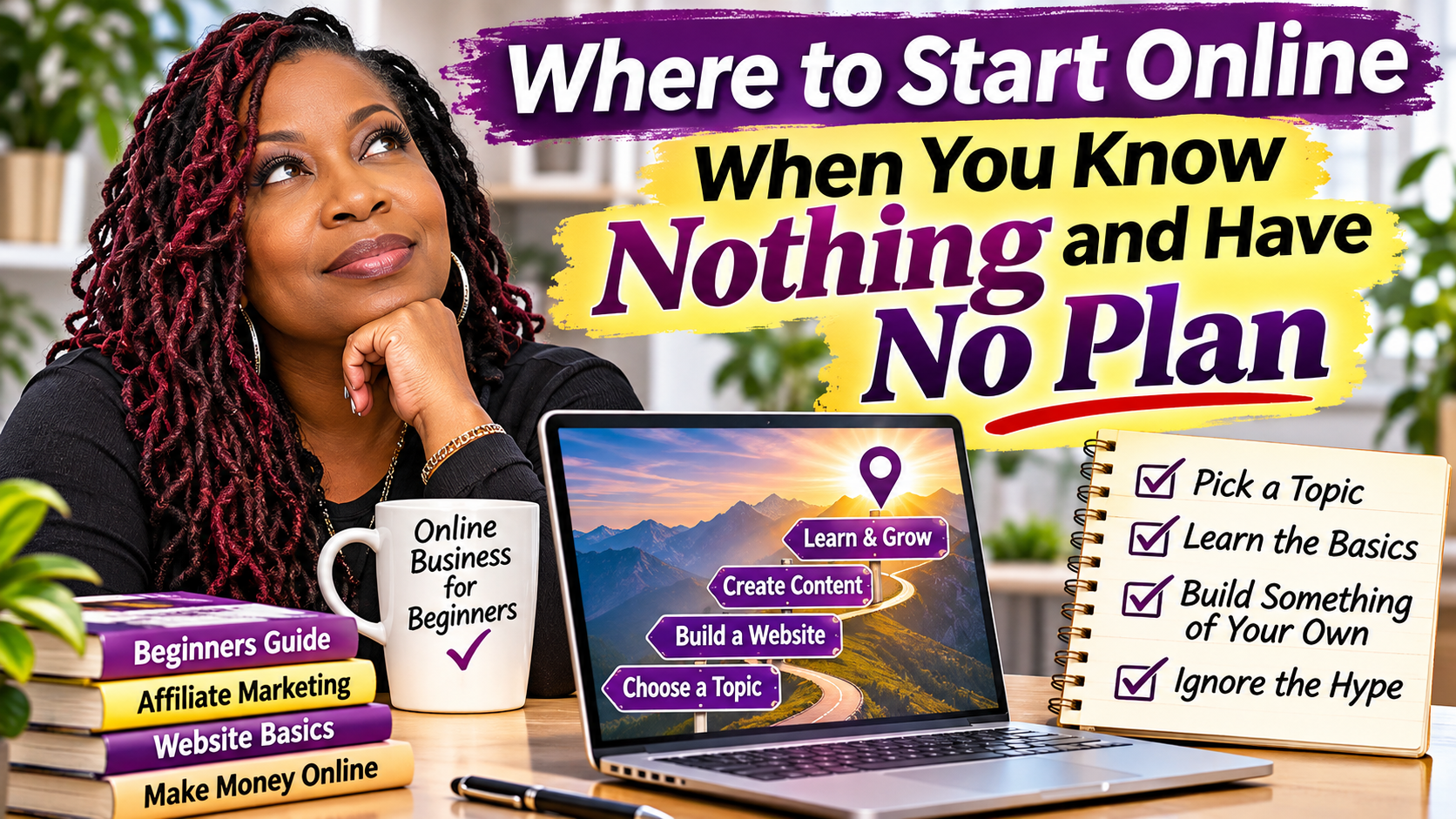
Instead, I’m going to walk you through a simple starting point for building something online, even if you don’t have a business idea, a website, or a clue about how any of this works.
And no, you don’t need to spend thousands of dollars to get started learning.
Why Your First Week Online Feels So Confusing
Let me tell you something I’ve learned from exploring online business opportunities.
There’s no shortage of people willing to tell you how to make money online.
But there’s a big difference between showing someone an opportunity and teaching them how to build a business.
When you’re brand-new, you don’t know what you don’t know.
You might not understand what a domain name is.
You might not know the difference between a website and a blog.
And you might think affiliate marketing means signing up for a program, sharing a link, and waiting for money to appear.
Then you discover there’s something called SEO, keywords, hosting, conversion rates, and website traffic.
Now your head is spinning!
That’s why I think beginners need a clear order of operations.
Not another list of money-making opportunities.
A starting point.

The Three Things You Actually Need Before Anything Else
Before you buy software, register a business name, or spend money on an expensive course, focus on these three things.
1. A Topic You’re Interested in Learning About
You don’t have to be an expert.
But you do need something you can stay interested in long enough to research, learn, and create useful content around.
Maybe you enjoy gardening.
Maybe you know a lot about taking care of natural hair.
Maybe you’re learning how to record music at home.
Or maybe you’re interested in helping people understand credit, budgeting, or everyday technology.
Any of those could become a starting point for a content-based online business.
But before choosing a topic, make sure people are actually searching for information about it and that you can offer something useful.
2. A Place to Build Something You Control
Social media can be useful, but I wouldn’t want my entire business to depend on one platform.
Algorithms change.
Accounts can get restricted.
And the platform decides how many people see your content.
That’s why I like the idea of building a website.
A website gives you a central place for your articles, tutorials, reviews, and other useful information.
Of course, you still need hosting, maintenance, and a way to attract visitors.
And owning a website doesn’t guarantee that anybody will find it.
But it gives you more control over your content than relying entirely on a social media account.
3. A Willingness to Learn Before Expecting Income
This might be the most important one.
You’re probably not going to create a website today and start collecting affiliate commissions tomorrow.
Building a useful online business takes time.
You’ll need to learn how to create content, understand your audience, and figure out how people discover your website.
You’ll also make mistakes.
That’s part of learning.
The goal in the beginning shouldn’t be making $10,000 a month.
The goal should be understanding what you’re building and why somebody would find it useful.
Pick a Topic You Can Keep Talking About
One mistake beginners make is choosing a niche simply because somebody said it was profitable.
Let’s say a YouTube video tells you that luxury watches are a great affiliate marketing niche.
But you don’t wear watches.
You don’t know anything about them.
And you have absolutely no interest in researching them.
How long do you think you’re going to enjoy writing articles about luxury watches?
Probably not very long!
Instead, think about subjects you’re naturally curious about.
Ask yourself:
- What do people ask me for advice about?
- What hobbies or interests do I enjoy?
- What problems have I learned how to solve?
- What products or services do I already research?
- Could I realistically create 20 helpful articles about this subject?
That last question is important.
You don’t need to know everything about your niche.
But you should be willing to keep learning about it.
Here’s a Simple Example
Let’s say you enjoy cooking inexpensive meals.
Instead of starting a website about everything related to food, you might focus on affordable meals for families.
Your first articles could include:
- Five Easy Dinners Using Pantry Ingredients
- How to Plan a Week of Meals on a Tight Budget
- Kitchen Tools Beginners Actually Need
- How to Reduce Food Waste at Home
- Budget-Friendly Meal Prep for Busy Parents
Notice something?
You’re not starting by trying to sell people something.
You’re starting by helping them.
Over time, some articles might naturally include relevant products or affiliate recommendations.
But the useful content comes first.

Why Building Something You Own Beats Chasing Quick Wins
Now, I know what some of you are thinking.
“I don’t want to spend months building a website. I need to make money!”
And I understand that.
But here’s something I wish more people would explain.
If you need money immediately, building a new affiliate website probably isn’t the fastest or most reliable solution.
Freelancing, local services, or other work that pays directly for your time may be more appropriate for immediate income.
A content-based business is different.
You’re creating something that may become more valuable as you add useful information and build an audience.
That doesn’t guarantee it will earn money.
But you’re developing skills and content you can continue improving.
Compare that with buying a new get-rich-quick program every month.
One month you’re trying dropshipping.
The next month you’re selling AI-generated ebooks.
Then somebody tells you about a brand-new automated income system.
And every time you switch, you’re starting over.
I’ve purchased online business training myself and followed instructions without getting the results I expected.
That experience taught me to stop assuming the next course would automatically be the answer.
If you’re interested, you can read more about that experience in my article on Legendary Marketer and what I learned from buying online business training.
What Beginners Should Ignore for Now
When you’re starting out, everybody seems to have something they want you to buy.
And some of those products may eventually be useful.
But you probably don’t need all of them during your first week.
- Expensive coaching packages promising fast income
- Multiple AI subscriptions
- Premium keyword research tools before you understand keywords
- Paid advertising before you understand your audience
- Advanced website software you don’t know how to use
- Several courses teaching the same beginner concepts
I’m not saying these tools are worthless.
I’m saying you should understand the problem a tool solves before paying for it.
For example, if you haven’t created your first article, you probably don’t need an expensive subscription to automate publishing hundreds of articles.
Start with the basics.
Learn what works.
Then decide whether an upgrade is worth the cost.
Where Wealthy Affiliate Fits Into the Picture
Now, if you’re interested in building a website and learning affiliate marketing, one platform you may come across is Wealthy Affiliate.
Wealthy Affiliate provides training, website-building tools, and a community focused on online business and affiliate marketing.
It’s one option for people who prefer learning within a structured platform rather than piecing together information from dozens of different websites.
But I want to be clear about something.
You do not have to join Wealthy Affiliate to start an online business.
There are free tutorials, website builders, and other learning platforms available.
And a membership doesn’t guarantee you’ll make money.
Who Might Find Wealthy Affiliate Useful?
- Beginners who want structured lessons on building a website
- People interested in affiliate marketing and content creation
- Those who prefer learning with a community
- People who want to compare training and website tools in one place
Who Might Want Something Else?
- People who need immediate, reliable income
- Anyone who cannot comfortably afford ongoing membership expenses
- People who prefer learning entirely through free resources
- Those who want to run a business unrelated to websites or content marketing
I believe in researching a platform before paying for it.
That’s why I recommend reading my Wealthy Affiliate review, where you can learn more about the training, features, pricing considerations, and limitations before deciding whether it’s right for you.
Read My Wealthy Affiliate Review Before Joining.
Affiliate disclosure: I have an affiliate relationship with Wealthy Affiliate and may receive compensation from qualifying referrals.
Your First Seven Days: A Simple Beginner Plan
If you’re feeling overwhelmed, here’s what I would focus on during your first week.
You don’t have to finish everything perfectly. The purpose is to get some direction and learn the fundamentals.
Write down three subjects you enjoy or want to learn more about. Pick one to explore further.
Search Google, YouTube, and relevant communities to find questions people ask about your topic. Write down at least ten.
Learn what domains, hosting, website builders, and blog posts are. Compare free learning options before paying for anything.
Choose whether to begin with a website, a simple blog, or another content platform. Understand the costs and limitations of your choice.
Answer one real question about your topic. Focus on clarity and usefulness instead of trying to sell something.
Check your article for accuracy, readability, headings, helpful links, and whether it actually answers the reader’s question.
Write down five more useful article ideas and choose a realistic schedule you can maintain.
By the end of the week, you may not have earned a dollar.
And that’s okay.
Because the goal of this first week is learning how to begin, not pretending you’ve built a profitable business in seven days.
What Should You Do After the First Week?
Keep learning about your topic and your audience.
Create useful content consistently.
Learn the basics of search engine optimization, but don’t assume search traffic will appear automatically.
Explore how websites attract visitors through search, social media, email, and other channels.
And once you understand what your audience needs, research products or services that may genuinely help them.
If you’re considering affiliate marketing, start with my Affiliate Marketing for Beginners guide.
And before promoting any company, read my article on the affiliate program terms you should check before signing up.

Final Thoughts: You Don’t Need to Know Everything to Begin
If you’ve been sitting around trying to figure out how to make money online, I want you to remember something.
You don’t need to understand every business model.
You don’t need to purchase every tool.
And you definitely don’t need to follow every person promising a shortcut to financial freedom.
Start by choosing something you’re interested in.
Learn the basics.
Build something useful.
And give yourself permission to be a beginner.
You’re going to make mistakes.
You’re going to change your mind about some things.
And you’re probably going to discover that building an online business is more work than those flashy videos made it look.
But at least you’ll be learning how things actually work instead of constantly chasing another promise.
You don’t need a perfect plan to start. You need a small, realistic first step.
Want a Simpler Starting Point? Explore Quiet Money
If you’re tired of jumping from one money-making idea to another, I want to introduce you to my Quiet Money approach.
It’s about looking beyond the get-rich-quick promises and focusing on practical ways to learn about building an online business.
No guaranteed earnings.
No overnight success stories.
Just a more grounded way to explore your options and decide what makes sense for you.
Stop Chasing. Start Learning.
Explore Quiet Money and discover a more practical starting point for your online business journey.
Explore Quiet MoneyThis page may contain affiliate recommendations. I may earn commissions from qualifying purchases. Results are not guaranteed.
Frequently Asked Questions
Can I start an online business with no experience?
Yes. You can begin learning the basics without previous business experience. However, you’ll still need to develop useful skills, understand your audience, and test whether your business idea is viable.
Do I need money to start online?
You can learn many fundamentals for free, and some platforms offer free starter options. Running a website or other business may involve expenses such as hosting, domains, software, or marketing.
Should I start with a website or social media?
It depends on your goals. Social media may be useful for reaching an audience, while a website can give you more control over your content. Some businesses use both.
How long does it take to make money online?
There is no guaranteed timeline. Some businesses earn revenue quickly, while others take months or years, and some never become profitable. The business model, audience, expenses, and execution all matter.
Is Wealthy Affiliate required for beginners?
No. Wealthy Affiliate is one learning option, not a requirement. Beginners should compare its training and costs with other available resources before deciding.
Let’s Talk!
If you’re just starting your online business journey, tell me something in the comments.
What’s the one thing confusing you the most right now?
Is it choosing a niche, building a website, getting traffic, or figuring out how affiliate marketing works?
Leave your question below. You might be surprised how many other beginners are wondering the exact same thing.
Affiliate disclosure: This article contains links to resources and pages that may include affiliate offers. I may receive compensation from qualifying purchases or referrals, at no additional cost to you.
Disclaimer: This article is for educational purposes only. Starting an online business involves financial risk, and earnings are never guaranteed.